
By: Iman Neja
“The glorification of genocide is not honor; it’s a shame,” stated Mothers of Srebrenica, an organization of victims who lost their loved ones in the Srebrenica genocide, on X.
On Aug. 27, 2026, Ratko Mladić, former commander of the Army of Republika Srpska (VRS), died in a prison hospital in The Hague, the Netherlands, at age 84.
Nicknamed the ‘Butcher of Bosnia,’ he’d been convicted of genocide and crimes against humanity and then sentenced to life in prison in 2017 by the United Nations (UN) International Criminal Tribunal for the former Yugoslavia (ICTY) for his actions during the Bosnian War.
Mladić orchestrated the 1995 Srebrenica Genocide, where up to 8,000 Bosnian Muslim men and boys were killed, and more than 30,000 Bosnian Muslim women, children, and elderly were displaced.
On Sept. 7, 2026, the architect of the most brutal massacre in post-war Europe was given a hero’s funeral in Belgrade, Serbia.
In one of the biggest public funerals in Serbia since the 1990s, Mladić received military honors at the Serbian Orthodox Church of St. Luke. His coffin, on which lay his Serbian Military cap and his saber, was flanked by Serbian soldiers in fatigues and visited by thousands of mourners who lit candles in his memory.
Mladić’s funeral procession in Belgrade is symbolic of the most glaring issue for Bosniak victims: the refusal of many Serbian nationalists to acknowledge that there was, in fact, a genocide.
Munira Subašić, President of the Mothers of Srebrenica group, said that 31 years later, victims’ mothers are “still carrying the pain in our souls … we are still listening to denials, we are still listening to how Ratko Mladić was a hero for the Serbs,” according to reporting by The Guardian.
In 2017 address to the UN Security Council, prosecutor Serge Brammertz of the ICTY had warned the UN Security Council about the alarming level of denial and revisionism surrounding the war crimes the ICTY had proven:
“The message of denial and revisionism is loud and clear: ‘We recognize our victims, but not yours. Your war criminals are our heroes,” Brammertz said.
“It was a crime, but it was not genocide,” Milorad Dodik, the nationalist president of the Republika Srpska region of Bosnia-Herzegovina, stated in 2024, a sentiment that’s been repeatedly echoed by other Serbian nationalists.
Bosnia-Herzegovina is ruled by three presidents — a Bosniak (Bosnian Muslim), a Croat, and a Serb — with Republika Srpska as the majority-Serb district.
On July 21, 2021, the Republika Srpska-funded Independent International Commission of Inquiry on the Sufferings of All Peoples in the Srebrenica Region between 1992 and 1995 released a report in which it stated that the about 8,000 Bosnian Muslim men and boys murdered were actually “2,500-3,000 military prisoners” and included just “several hundred male civilians.” (p. 1038)
The report also claimed that the killings were not an act of ethnic cleansing, as the ICTY had ascertained, but were committed “to eliminate a military threat.” (p. 1038)
The European Union’s Commissioner for Enlargement, Marta Kos, warned that the glorification of Mladić’s legacy following his death is “incompatible with the values on which the EU path is built. That path requires confronting the past, genuine reconciliation and respecting the victims of war crimes.”
In light of those words, more than 30 years later, we examine that path. Has justice been served? What progress has been made to help the Bosniak community in recovering from the horror of genocide at Srebrenica? And what lessons can the UN and international community learn to prevent such a genocide from happening ever again?
How the UN “Safe Zone” became a site of ethnic cleansing
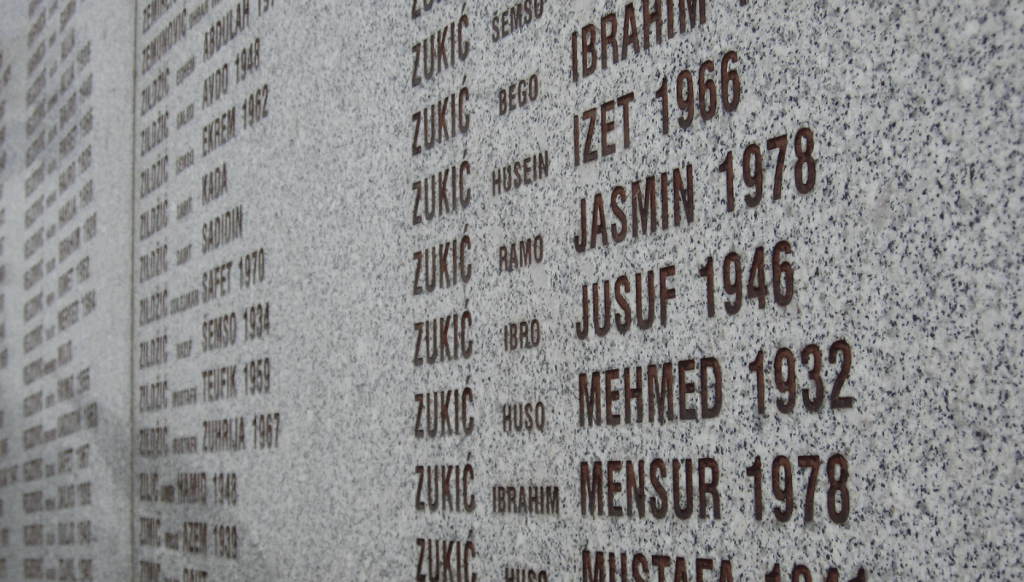
In 1992, Bosnia and Herzegovina — a country of Serbs (Christian), Croats (Christian), and Bosniaks (Muslim) — declared independence from Yugoslavia. Nationalist Serb leaders wanted to force out Bosniaks to create a majority-Serb territory — systematically forcing Bosniaks out of their homes, placing civilians in brutal concentration camps where women faced sexual violence, and cutting off food and water while bombing civilians.
While violence against Bosniaks was widespread throughout the country, the town of Srebrenica was the site of the July 1995 Bosnian genocide.
As a refuge for Bosniaks fleeing the Bosnian Serb Army’s (VRS) attacks on villages and towns across Eastern Bosnia and Herzegovina, Srebrenica was supposed to have been safe. The town and its surroundings, in dire straits from being besieged and frequently shelled by the VRS, had been unanimously declared a UN-established “safe area” by the UN Security Council.
In March 1995, however, Radovan Karadžić, President and Supreme Commander of the army of the Republika Srpska, instructed the VRS to: “create an unbearable situation of total insecurity with no hope of further survival or life for the inhabitants of Srebrenica” in an attempt to gain territory and assert control over the land.
On July 6, the VRS launched an intensive bombardment of Srebrenica, including firing on a civilian hospital, and ultimately seized Srebrenica on July 11. By then, about 4,000 people had fled to Srebrenica from a refugee housing complex in Slavinovici, another village which had been shelled by Bosnian Serb artillery fire and then seized and burned to the ground by the Bosnian Serb army.
On July 11, the VRS entered Srebrenica, burning Bosnian Muslim homes and mosques. On film, Mladić made the damning statement that would later be used as evidence against him in court:
“We give this town to the Serb people as a gift … Finally, the time has come to take our revenge on the Turks [referring to Muslims] in this region.”
That evening, about 25,000 — mainly women, children, and some non-draft-age men and boys- fled for the UNPROFOR compound in Potočari, a town 5 kilometers north. At the same time, 10,000-15,000 mostly Bosniak men and boys formed a column through the dense forest, walking on foot from Srebrenica towards the direction of Bosnian-held territory in an attempt to reach safety.
The VRS would shell areas where civilians were fleeing towards Potočari. The situation in Potočari grew more horrific when the VRS arrived: they began to sporadically abduct and murder men and boys in the night, with one ICTY witness recounting how a mother, who went out looking for her three young sons (two teens and one child), only to find them dead. Other witnesses saw and heard women being dragged away by Serbian soldiers. In the morning, Bosniak refugees searching for water found clusters of corpses by a nearby stream.
Then, on July 12 and July 13, the VRS began to systematically separate men and boys, some as young as 12 and as old as 60, from their families. The remaining women, children, and elderly were then forcibly boarded onto buses heading towards Tuzla, in Bosnian-held territory, and told that the men and boys would join them later.
The men and boys, together with those captured in the “man hunt” of heavy shooting and shelling through the forest column, were taken to various execution sites.
They were systematically murdered in empty schools, football fields, farms, and warehouses, where the Bosniak men and boys were often lined up and shot. In multiple instances, they faced cruel and horrific treatment before being murdered, with many of them being threatened, beaten, and forced to sing Serb songs.
On July 16, 1,000-1,200 Bosniak civilians were killed at Branjevo Military Farm, with many of them having their hands tied, eyes blindfolded, and forced to pray in “the Muslim manner” before they were killed.
On July 14, UN soldiers arrived in Srebrenica. They could not find a single Bosnian Muslim alive in the town. The VRS had “cleansed” Srebrenica, and the UN had failed in keeping it safe.
The UN and international community’s failure
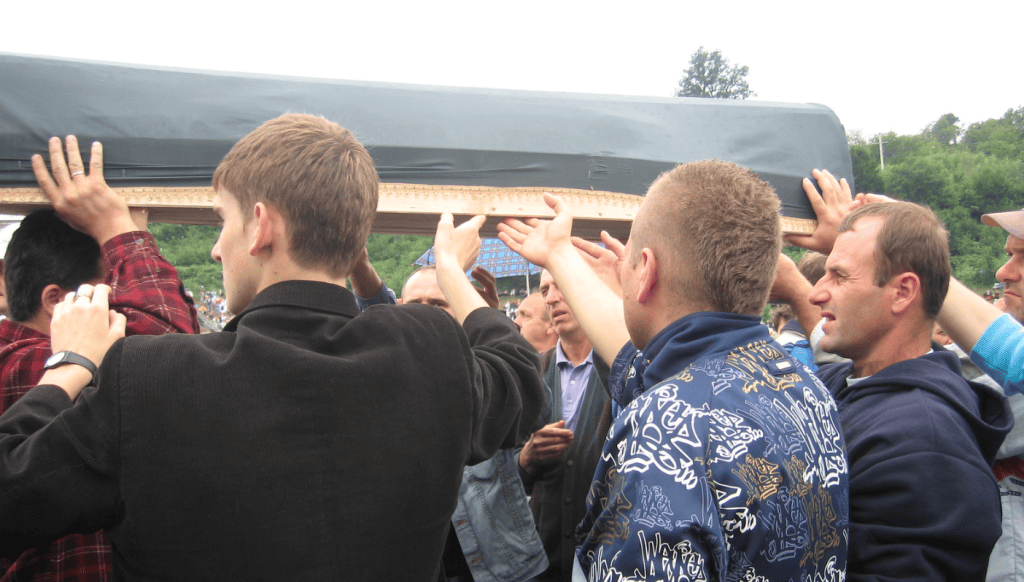
Srebrenica is also marked by the failure of the UN and the international community in preventing the disaster and protecting the Srebrenica civilians.
To protect the town, UNPROFOR held a small command center in Srebrenica and a larger compound at Potočari, with troops rotating in every 6 months. The Dutch battalion, Dutchbat III, roughly 600 men, was the UN force responsible for the area at the time. Although the battalion had been allowed to allowed to act in self-defense and use force in response to an armed incursion into Srebrenica, a post-war UN investigation found that they didn’t have the necessary military force to actually do so.
Outnumbered and lightly armed, they could not defend the Bosniaks. They essentially surrendered and cooperated with the VRS, who then separated Bosniak men and boys and loaded women, children, and elderly into buses at Potočari on July 12.
There were also about 5,000 Bosniaks who’d sought refuge within the UN compound in Potočari, and among them were 350 men. Before the Dutchbat force forced them out of the UN Compound and handed them over to the VRS on July 13, these men expressed fears of being murdered to the Dutchbat Deputy Commander and reminded him that the bodies of 9-10 executed men had been found earlier near a stream; however, the Dutchbat personnel involved stated afterward that they believed in Mladić’s promise that the men would be treated in accordance with the Geneva Conventions.
In 2011, a court in The Hague did find the Dutch Government responsible for the deaths of 3 Bosniak men: Rizo Mustafic, Ibro Nuhanović and Muhamed Nuhanović, who’d been among the roughly 350 men forced out of the UN Compound.
The Dutchbat force had witnessed Bosnian Serb soldiers mistreating and murdering male Bosniaks near and around the Potočari compound, so it was clear the Bosniak men were in danger. If they’d looked the other way, fearing what would happen if they’d not given Bosniaks up, that would only lead to a very important question:
Why would the UN pass a resolution to protect Srebrenica, and then provide the UNPROFOR with such little military strength to the point that they became a liability to Srebrenica’s civilians — and only leverage for the VRS?
Dr. Kate Seaman, the Assistant Director of The Bahá’í Chair for World Peace at the University of Maryland whose research specifically focuses on UN peacekeeping operations, explained that Srebrenica is an example of a broader issue within UN peacekeeping: a “mismatch between the mandates they’re given and then what they’re actually able to achieve.”
“The UN doesn’t have its own resources,” Seaman said. “The political reality is that the Security Council will put in the mandate: ‘Well, we’re going to do all of these things,’ but then … it’s reliant on its member states to provide all of the resources, so to provide the funding and the military and the troops and all of the logistics.”
The problem also partly lay with the UN peacekeepers as an organization. In the early 1990s, peacekeepers began being deployed into intra-state conflicts, even though they’d initially been “designed to be between two sovereign states.”
The UN hadn’t addressed what changes would be needed, Seaman told Al-Hikmah.
There was still “deployment of kind of minimally armed peacekeeping troops into situations where there was a mismatch between the kind of strength of the different groups, and then they were being politicized … and having to kind of pick sides in a conflict, which they also wanted to avoid doing because peacekeepers are supposed to be neutral,” she said.
Kofi Annan, who headed U.N. Peacekeeping operations at the time, said later the big mistake that the U.N. had made in Srebrenica was that in attempting to be neutral, the U.N. had treated Serbs and Bosniaks equally when they should have made a “moral judgment” against the Serbs’ campaign of ethnic cleansing, according to reporting by the Honolulu Star-Bulletin.
“On the Bosnian side, we weren’t fighting for an ethnically cleansed Bosnian state,” said Hamza Iseric, a Bosnian PhD student studying computer science and bioinformatics at UMD.
“That was not what our leaders were talking about, like Alija Izetbegović; he was one of the Islamic philosophers and was our president during the war, and what we were fighting for was a state for all, for Serbs, for Croats, for Bosnians, for all people that call this country home,” he stated, adding: “People were fighting for the ideas that were noble.”
A community’s struggle to recover post-genocide
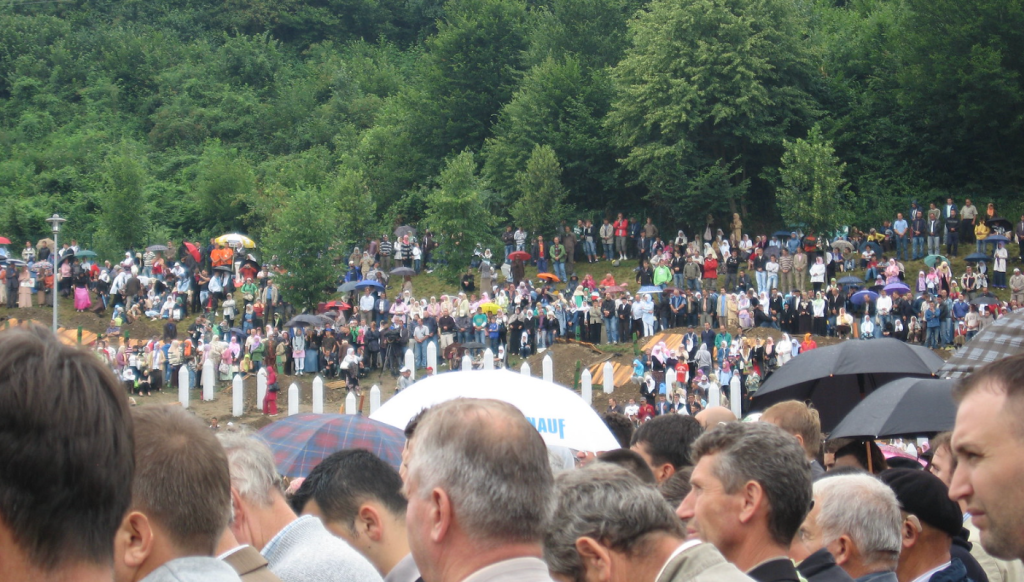
Dr. Erin Mosely, an assistant professor of history at the University of Maryland (UMD), whose research focuses on post-genocide justice, memory, and repair, specifically in the context of the 1994 Rwandan genocide, helped give insight into how communities recover post genocide.
While Mosely’s research mostly focuses on Rwanda, many common themes of post-genocide recovery also appear in Srebrenica.
According to Mosley, although 30 years have passed since the atrocities in Srebrenica and Rwanda, addressing “the longer-term emotional, psychological impacts of these catastrophes” often stretches across a “very long lifespan.”
“[Recovery] is going to be a long and uneven and sometimes just irresolvable… set of challenges,” she said.
“Usually the physical wounds are dealt with first,” Mosely said. “Everything about the society has to kind of start rebuilding itself, and it kind of takes a little while for things involving psychosocial support.”
Mosely said that recovery in both Rwanda and Bosnia-Herzegovina is complicated because victims live in close proximity to the perpetrators.
In Bosnia-Herzegovina, Mosely said, “ethnic cleansing happened, and the legacy of that in terms of … having these really kind of ethnically divided, sort of parallel communities … is still very much a part of the contemporary makeup of that society.”
Mosely said that conflicting narrative about the genocide also plays a role.
Unlike Rwanda, where “there is a very cohesive national narrative about the genocide that is … everybody, no matter who you are, is hearing … from the national government,” Bosnia-Herzegovina is structured in a way that creates “polar opposite set[s] of narratives” based on regional divisions and education systems, Mosely said.
An example of this is the Srebrenica-Potočari Memorial Center, which is physically located within the Republika Srpska.
“Imagine if you’re someone driving to this memorial site who’s … providing a narrative about the fact that a genocide occurred in Srebrenica—is using the word genocide—and yet you’re driving through neighborhoods where, you know, maybe like billboard images of Mladić … as a Serbian hero … is right there as you’re kind of driving past and going to this memorial space. So I find that to be actually like a really telling kind of example of some of the complexities here of how you can have … simultaneous memorialization and commemoration with like denial.”
For victims, “what they want is acknowledgement that what happened to them happened to them,” said Mosely, “more than anything, more often than not, even sometimes more than retributive justice.”
Seeking justice beyond conviction
Mladić and other major leaders, such as Radovan Karadžić and Zdravko Tolimir, Assistant Commander for Intelligence and Security, have been have been captured, convicted, and sentenced. Even when multiple efforts were made to secure Mladić’s early release because of poor health, the International Residual Mechanism for Criminal Tribunals rejected these requests. While Serbian nationalists may revere the war criminals and deny the atrocities they’ve committed, they are guilty in the eyes of international courts.
Mosely explains that the conviction of major war criminals like Mladić remains useful to victims.
“His reputation as the butcher of Bosnia, in part because of the ICTY conviction, is ultimately the one that has global currency,” she said. “Activists or victims’ groups can say, look at the ICTY record — this has been ruled a genocide. People can use those convictions as ammunition in the fight against denial.”
For Iseric, denial of the genocide is concerning for the next generation.
“It’s easy to be educated; some people would still choose to be uneducated,” he said. “It is also scary for the generation that comes after us if the other side continues to educate their kids that they’re better or the other life doesn’t matter, or you can take another life just because it is of a different religion.”
And for Srebrenica victims like Munira Subašić, president of the Mothers of Srebrenica group, and organizations like Remembering Srebrenica, the fight against genocide denial and revisionism remains tireless. They continue to promote awareness, educate others about the Srebrenica genocide, and fight for recognition and acknowledgment.
Srebrenica’s legacy and lessons learned
In a failed attempt at concealing their crimes, senior members of the VRS and the Ministry of the Interior (MUP) exhumed the mass graves of the Bosniak victims multiple times.
“There was this concept of many different graveyards,” Iseric said. “So they would bury people in one and then excavate them and then bury them in another and then excavate them again and then bury them in the third.”
This resulted in the remains of victims being even more difficult for their loved ones to identify and find, which has caused even more distress.
The International Commission of Missing Persons (ICMP), which uses advanced DNA techniques to help identify the remains of missing Srebrenica victims, reports that typically, the individual remains of Srebrenica victims have been found in 3-4 different mass grave sites.
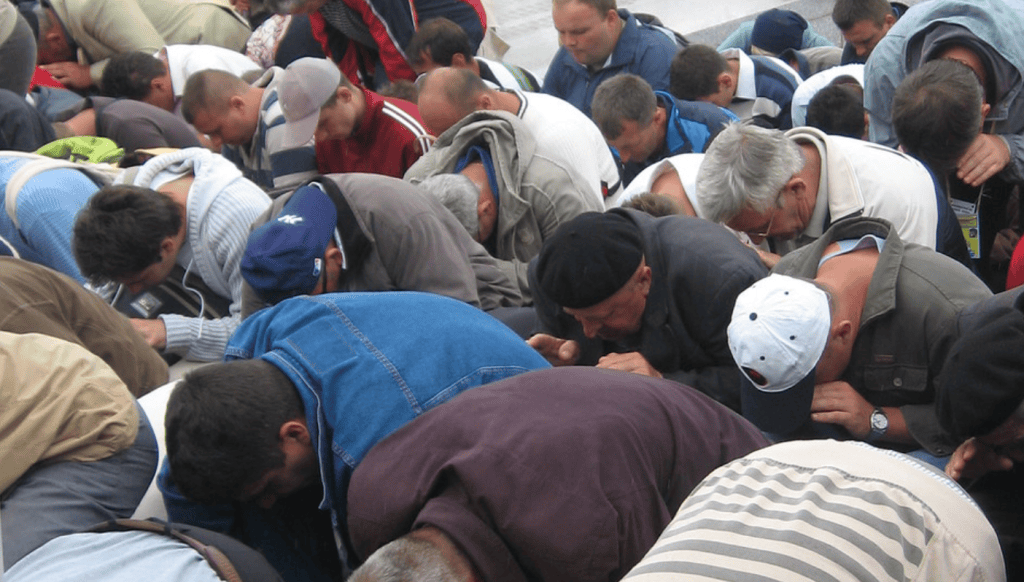
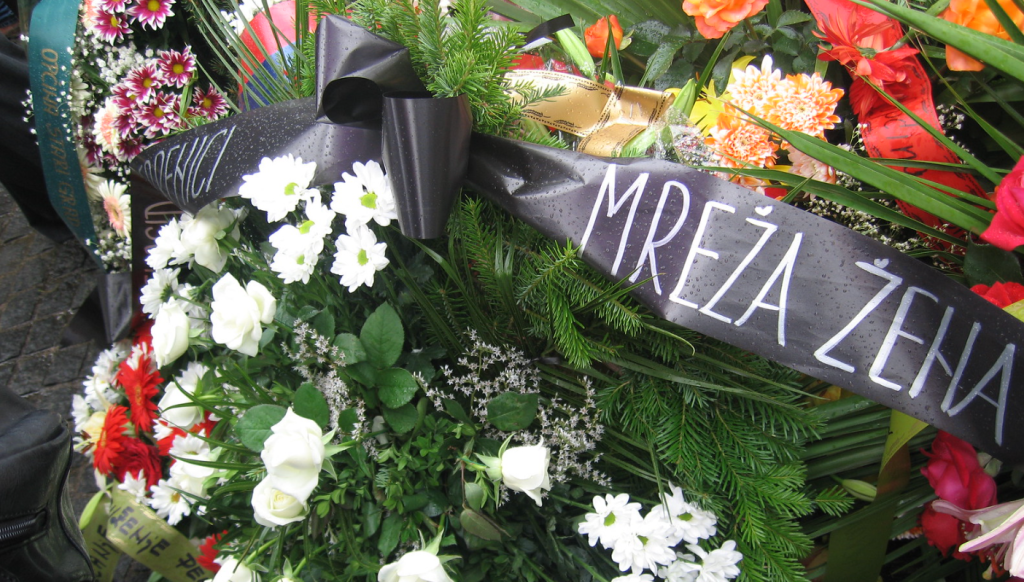
“There would be janazah [funeral prayer] for remains that were being found. Because even now, 30 years after the war, we were finding some of the bones, some of the remains of our killed people.” Iseric said. “There was a formal ceremony, and then the whole day there were stories about Mothers of Srebrenica.”
“It took years to find just two bones from my son’s remains,” said Kada Hotić, a member of the Mothers of Srebrenica, according to UN News.
In October 1999, UN Secretary-General Kofi Annan apologized for the UN’s failure to protect the citizens of Srebrenica: “We will never forget that Bosnia was as much a moral cause as a military conflict. The tragedy of Srebrenica will haunt our history forever,” and that “No one laments more than we the failure of the international community to take decisive action to halt the suffering and end a war that had produced so many victims.”
The Responsibility to Protect (R2P) doctrine, which emerged in response to the mass atrocities that happened in Srebrenica and Rwanda in the 1990s, is a doctrine that states that nations have the “responsibility to protect” populations from genocide, war crimes, crimes against humanity, and ethnic cleansing.
“It was kind of a new way of justifying violating a state’s sovereignty,” Seaman told Al-Hikmah. But that responsibility hasn’t been clearly defined in the doctrine, she said.
“I don’t think it’s been kind of clearly applied in any situation, either, because what you also see with these developments is again the politicization of them and kind of using them as tools that they weren’t intended to be used as,” she said.
Srebrenica, now part of the Serb-dominated Republika Srpska, faces denial of the horror it endured 31 years ago from within. It had become a Serb-majority city in 1995.
As reparation for the ethnic cleansing of Bosniaks from Srebrenica, any person on its 1991 electoral registry could vote in municipal elections, leading to elections of Bosniak mayors by the survivors.
But in 2012, this rule wasn’t renewed, and the Serb-majority town elected its first Serb mayor, Mladen Grujicic, in 2016. He claimed that Srebrenica’s Serb majority faced discrimination and denied that the Srebrenica massacre was a genocide.
To preserve the memory of Srebrenica and help the community recover, Iseric said: “Education is number one.”
“Knowing the full timeline of things, knowing the people that were involved, the war crimes that have been committed,” he said. “Building your own community, building your own country the best you can, and representing yourself, your community, [and] your religion the best you can.”
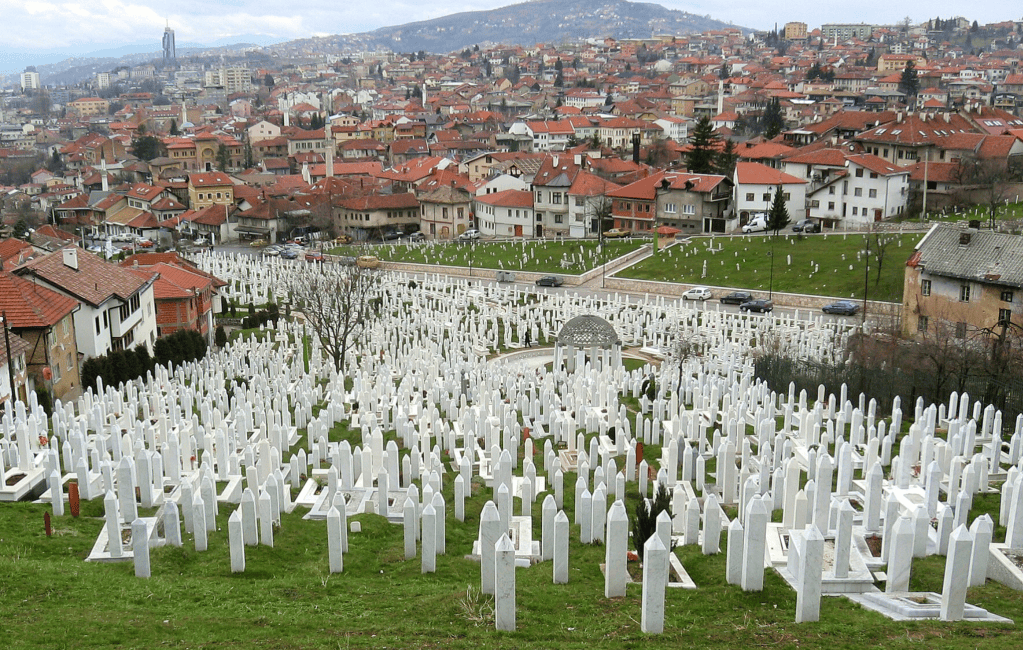
Image credits: Cover photo by Michael Büker at the Martyr’s Memorial cemetery in 2009. Cropped from original. Used under CC BY-SA 3.0. [Link to original image.]


Leave a comment