
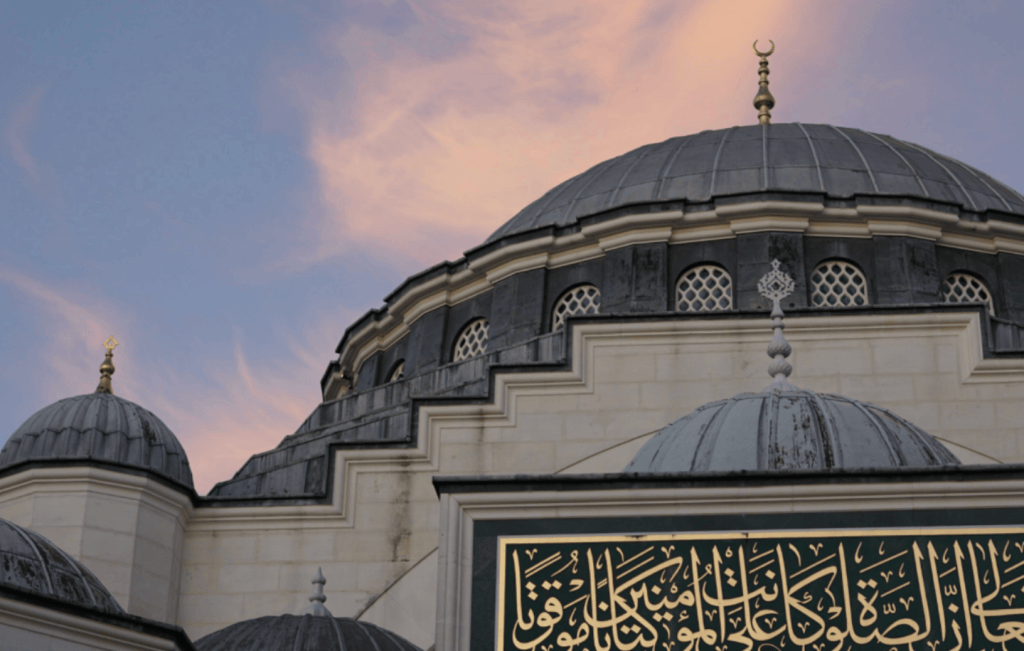
وَلَقَدْ بَعَثْنَا فِى كُلِّ أُمَّةٍۢ رَّسُولًا أَنِ ٱعْبُدُوا۟ ٱللَّهَ وَٱجْتَنِبُوا۟ ٱلطَّـٰغُوتَ ۖ فَمِنْهُم مَّنْ هَدَى ٱللَّهُ وَمِنْهُم مَّنْ حَقَّتْ عَلَيْهِ ٱلضَّلَـٰلَةُ ۚ فَسِيرُوا۟ فِى ٱلْأَرْضِ فَٱنظُرُوا۟ كَيْفَ كَانَ عَـٰقِبَةُ ٱلْمُكَذِّبِينَ ٣٦
“We surely sent a messenger to every community, saying, ‘Worship Allah and shun false gods.’ But some of them were guided by Allah, while others were destined to stray. So travel throughout the land and see the fate of the deniers!” (Quran 16:36)
— Translation by Dr. Mustafa Khattab, The Clear Quran
I must admit, this ayah is one that often threw me into a state of confusion and then contemplation. Why? Because it immediately forces you to look for the proof of its supposition. By making the claim that every community was sent a messenger, it risks a historical rebuttal that would render the ayah fallible. This train of thought is what drove me to think deeper about the foundational premise of Islam, until I arrived at an argument I thought worth an Al-Hikmah article.
The main question that would rattle around my mind until I reached the rationale I put forward in this article:
If Islam is indeed the ultimate truth and its message was delivered to every nation, why isn’t it the majority religion today? Why wouldn’t God make this religion universal and undeniable to all?
This argument has no doubt been debated and answered in a number of forums, but I will attempt to answer it in 3 straightforward sections. First, by explaining why religion exists and specifically why monotheism is the most logically congruent way of life. Second, by exploring the unique universality of Islam. And finally, by analyzing some observations from my recent study abroad in Japan that put the first two sections into a real-world perspective.
But first, every good paper must have a thesis (I do apologize if mine is atypical, but I hope to preempt your own thoughts on the matter so that you can organically arrive at the same rationale as we move forward.)
Firstly, why does religion exist at all, and in such variety? Is there a natural human inclination toward it that explains its perseverance across the earth? There must be a deeper reason behind religion’s persistence across every form of society — and behind the similar hierarchical, monotheistic structures that appear across all of them (more on this later) — beyond the need to externalize blame or meaning, as many atheists would argue (no more on this later).
I claim Islam is universal because it is a “complete way of life” that speaks to every aspect of your existence, from your character to your family, to your neighbor, to how you govern. If every nation was truly sent a messenger, then we should expect to find echoes of this “way of life” within every diaspora, no? Furthermore, if Islam is undeniable, then it must resonate with innate human inclinations as well as provide a framework for not just life but existence that bridges every cultural divide.
Finally, if every religion does originate from the same source, as Allah SWT tells us in Surah An-Nahl, then what we find in Islam which claims to be the last, final, and perfect message should have a constant thread connecting it to everyone else. No final message can be for a specific group or limited by geographical distributions; it must appeal to all and clarify all discrepancies. Would not an analysis of the global Muslims demographics serve as evidence for this?
Now do these thoughts give proof that only Islam is uniquely capable of crossing the ethnic divide because it aligns with the correct human tendency toward the Divine? I say yes; you say… possibly?
That is why the third section exists: in places where Islam and even monotheism is not followed, we should still be able to find and analyze the remnants of this way of life embedded in the cultural values and traditions that remain.
1: Monotheism is the factory setting
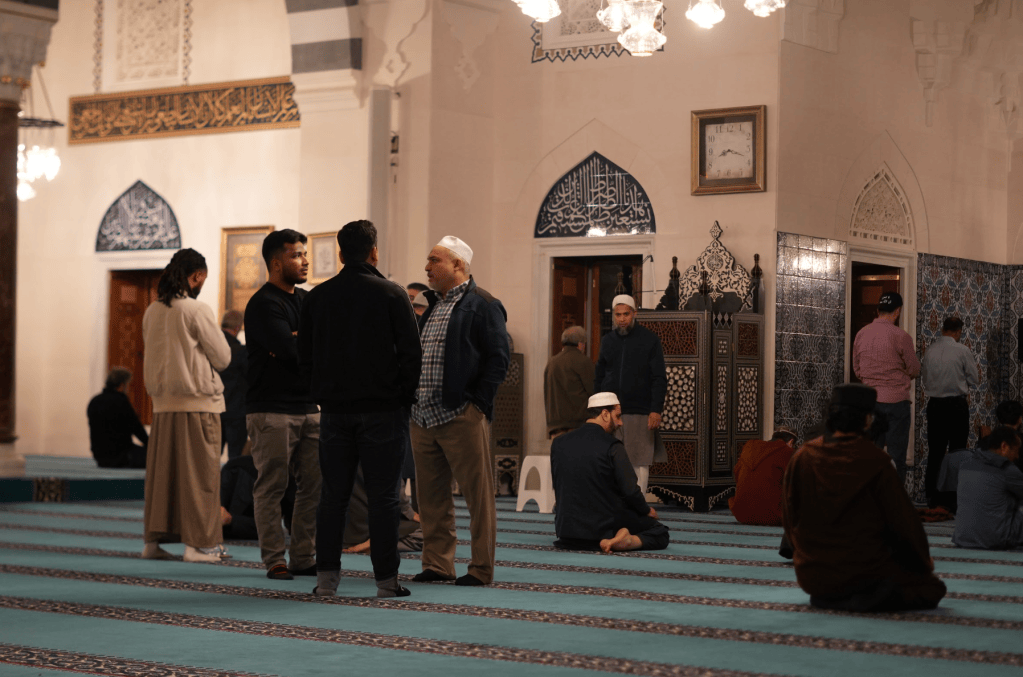
While attending an Islamic seminar class a few years ago, something struck me about the nature of monotheism. Where exactly did other religious forms come from? I asked the teacher, Dr. Ali Ataie from Zaytuna University, “Why do polytheistic societies exist? If Islam is the default religion, then where did the Greeks and all other forms of polytheistic societies come from?” His answer is one of the things that helped me develop this entire article (paraphrased because my memory is not that good and I didn’t write it down): Monotheism is the natural human tendency. You can see it in every type of society. Even when you look at polytheistic ones, you don’t see true polytheism; you tend to see a pantheon of gods where everything surrounds a central figure. Polytheism grows out of associating different aspects with that central authority figure or through “anthropomorphizing” the attributes of the central authority. For example, Hinduism. The different gods we perceive them as having are in actuality attributes of Brahman. Ancient Greek mythology exists within this pantheon, — we know of the king of Olympus Zeus, but even their origins come from the deeper origin of the universe in Chaos.
The pantheistic, polytheistic, non-monotheistic examples serve to explain this historical pattern. Societies across history have started with monotheism, and it is the form that makes the most logical sense: any other form creates a hierarchy among beings that are, at the end of the day, supposed to be all-powerful and all-knowing. Two omnipotent beings is redundant and a logical contradiction. One is the only coherent answer. This explains why we see remnants of original monotheism embedded across every tradition and why I am arguing that polytheism originates from modifications and additions to monotheism over time.
(Will this argument be complicated when I talk about Shintoism in Japan later? Yes. But you won’t know that until you get there, so it’s fine.)
This pattern additionally serves as evidence of the fitrah: the innate human disposition towards understanding what is right and wrong, towards recognizing God and the oneness of his existence. The questioning of existence isn’t random, it’s the fitrah expressing itself. You’re born with it, and it manifests as the compulsion to ask “why am I here?” and “what is this all for?” When you pair it with revelation and religion, it gives true explanation why the universe exists. The fitrah is what compels us to search for the reasons and the understanding of why we exist, and revelation is where those answers are found.
This is also why revelation itself follows the same universal pattern. If God exists, created the universe, and created us, then the pattern of sending guidance is only the natural course He would take given His investment in us and His reason for creating us. And across every society, in every place, you find scripture. These books of scripture consistently arrive to give laws, to give purpose, and to give reasons for existence. Allah SWT even affirms this logical thought process by telling us that messengers were sent whose stories were never even told to us (We have told you the stories of some of them, while others We have not 40:78), and it explains why he tells us to search and look at those who denied the message in Surah An-Nahl.
2: Islam is borderless
Now that I’ve thoroughly convinced you, only a true monotheistic religion, such like Islam, can be the one that represents the origin behind religion, we must also analyze how Islam is universal and undeniable.
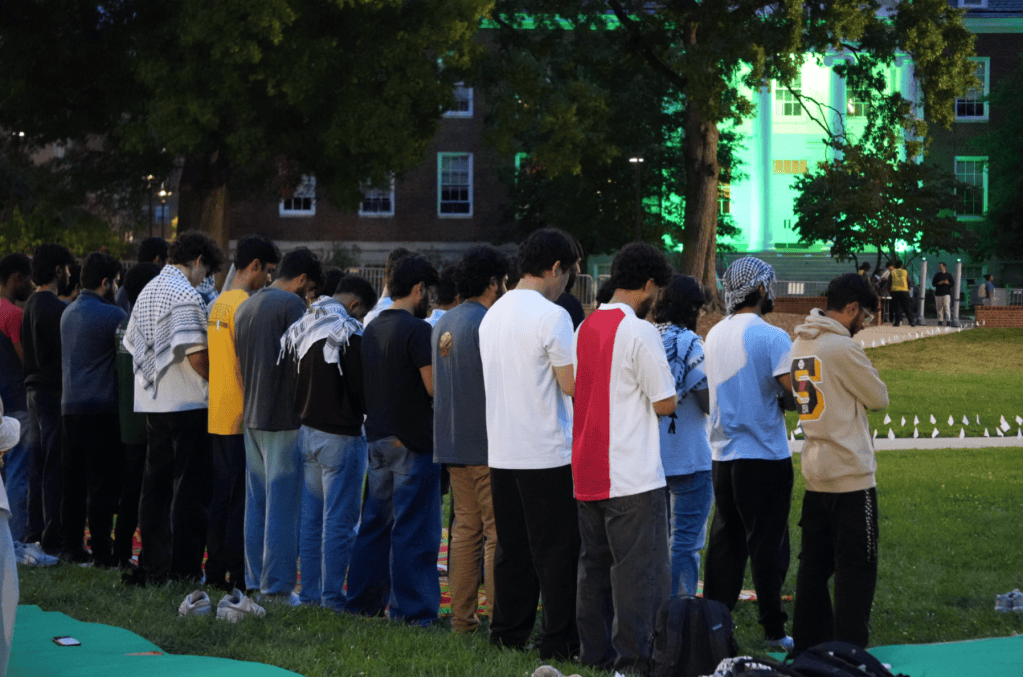
Islam is not the most ethnically diverse religion in the world — by raw demographic spread, Christianity wins all the prizes. However, I make the claim that there is no ethnicity on Earth without a Muslim presence or that cannot convert to Islam. No current belief system renders someone incapable of converting to Islam. Islam can and has been taken up by people on every continent. Similar to Christianity, albeit detached from the exact same colonialist expansion of the European powers, Islam has reached every wall of the world.
This is not, in itself, surprising if the premise from the previous section holds. If every nation was sent a messenger, and if human beings are built with an innate pull toward recognizing one God, then a true and complete continuation of that message should be recognizable to anyone, anywhere, regardless of what they already believe — it would be borderless. This borderlessness isn’t just a feature of Islam. It’s what we’d expect to see if the message is true and actually meant for everyone. Islam should be the answer to what is already present in the listener.
This is where we now make contrasts with other religions. If a religion is bound to one place, one people, or one social structure, that’s evidence its content was built for that place, people, or structure; heretofore, it’s not universal. Hinduism, for instance, has no formal process for someone to join from outside — even sympathetic modern attempts to create one have had to invent the ritual from scratch and still assign the convert a caste, because caste is inseparable from the religion (Clémentin-Ojha & Gaborieau, 1994).
Buddhism’s barrier is different but similar: it is geographically isolated to South and East Asia. The religion often fuses with ethnic and national beliefs and identities, creating syncretic belief systems, such as with Shinto in Japan and Daoism in China to form distinct regional sects, Zen Buddhism in Japan, Theravada in Southeast Asia, Tibetan Buddhism in Central Asia. Because the religion fused into these national identities, it also created outsiders out of indigenous peoples like the Hmong, who practiced animist traditions and found themselves excluded from the dominant Buddhist national identity of the countries around them.
“But those are not monotheistic faiths like Islam; you can’t compare apples and oranges,” so says the peanut gallery.
Well, one, you can; they both come from fruit trees, so farmers need to evaluate their economic potential amidst growing conditions, and two — Judaism, which is monotheistic, has very complicated and lengthy routes for conversion. Similarly, Christianity has fragmented into Catholicism, Protestantism, and hundreds of denominations with fundamental theological differences: whether God exists as a Trinity or a single undivided being, whether salvation comes through faith alone or faith and works, and whether the Pope holds divine authority at all. If Christianity were the universal truth, you would expect it to have a single, universally accessible entry point. It does not.
Islam’s core requirement, on the other hand, is to believe in One God and accept that Muhammad ﷺ is His Messenger. Afterwards, live according to Allah’s (SWT) commands. There is nothing to translate across cultures, ethnicities, and geographical barriers, because the message is not limited to one culture.
Many believe falsely that because the Prophet Muhammad ﷺ came to Arabia, Islam is a religion for Arabs, or that to be a good Muslim, one has to act more Arab. Yet, Islam itself rejects this notion of an Arab religion. Its central theme holds that Islam is for everyone, and there is no greater proof of this than the Quran and Sunnah themselves. From the Last Sermon of the Prophet as narrated by over 1163 Sahabah (making it mutawatir or mass-transmitted and irrefutable): “All mankind is from Adam and Eve. An Arab has no superiority over a non-Arab, nor does a non-Arab have any superiority over an Arab. A white has no superiority over a black, nor does a black have any superiority over a white, except by piety and good action. Learn that every Muslim is a brother to every Muslim, and that the Muslims constitute one brotherhood.” (Musnad Ahmad 23489) – Interestingly, and in line with the logical argument we have developed thus far, Islam is canonically antiracist.
Islam inherently destroys caste and the idea of any hierarchy based on language, color, race, or background. It makes discrimination on these grounds haram. Islam is not an Arab religion. Muslims come from diverse ethnic backgrounds, speak hundreds of languages, and are the majority in 49 different countries, home to roughly three-quarters of the world’s Muslim population (Pew Research Center, The Future of the Global Muslim Population). A Muslim in Lagos, Nigeria and a Muslim in Jakarta, Indonesia share essentially no linguistic, ethnic, or colonial history with each other, and yet both recite the same Arabic verses, face the same direction, and observe the same fast. A Muslim in Maine, Jakarta, or Lagos can recite Quranic verses in Arabic every day without speaking a word of conversational Arabic. Despite these vast differences between each group, it serves as Allah’s Evidence that every group in existence can be Muslim if given the right teachers. It’s why He says “So travel throughout the land.”
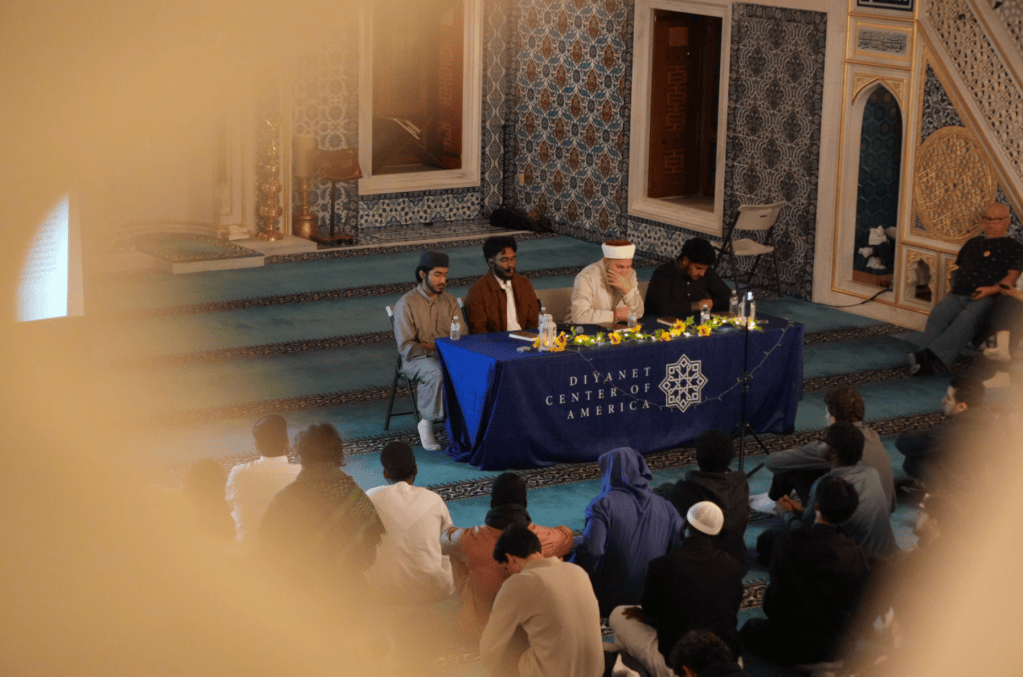
That last point is important historically. (Tangent incoming; can skip if bored.) Without Arabic being used as a connective language between the Far East and Far West, the scientific revolution would be centuries behind. During the Islamic Golden Age, Arabic became the lingua franca of science and scholarship across an empire that stretched from Al-Andalus to Central Asia. It was used by Persian, Amazigh, Turkish, and Indian scholars alike to translate and build on Greek, Persian, and Indian knowledge. The ancient Greek was translated into Arabic which gave the European scholars of the “renaissance” the literacy needed to develop hundreds of years after Baghdad. Arabic is not simply an Arab possession and one can’t claim Islam is for Arabs based on the language, Arabic exists as a historical legacy that any Muslim can inherit.
Indonesia serves as a perfect case study for this kind of conversion. Islam first spread to Indonesia through trade and was adopted by kings and traders. However, it was the Sufi missionaries who spread Islam to the common people. According to the Indo-Islamic Heritage Center, these Sufis embraced local customs and traditions, creating a harmonious blend with Islamic teachings that resonated deeply with the people. This led to widespread conversion. People were shown the similarities between their worldview and Islam, and Islam presented itself as a natural extension of what they already believed.
Beyond growth by birth rate, Islam also holds unusually high retention: people raised Muslim tend to stay Muslim at higher rates than is typical of other major world religions. That retention factor matters a lot for this analysis and argument. A religion installed by conquest or inherited only by birth would be expected to erode once that pressure lifted.
Instead, across nations that share no language, no race, and no colonial history with each other, the message holds. In fact, in China, despite generations of attempted cultural erasure of the Uyghurs; in Burma, by the Buddhist military against the Rohingya; and by the Zionists against the Palestinians, rather than fading under systemic attempts at erasure or persecution, adherence to Islam often deepens.
Generations of Muslims have maintained their identity as minorities worldwide, suggesting that their commitment isn’t just a cultural habit. Generations of Muslims have existed in pockets around the world despite being the minority and despite persecution.
This is why Islam is universal. It can be taken up by any person, regardless of where they come from or what they previously believed. It does not ask you to abandon your humanity or your culture, it asks only that you recognize what your fitrah has been pointing you toward all along.
This section presents the idea that a message sent to every nation and aimed at something already present in every human being should look exactly like this: it is present on every continent and can be held by any if not every ethnicity. The truth doesn’t need to be the majority opinion to be the truth, and a message doesn’t need universal acceptance to have universal reach. What’s being measured here isn’t how many people believe it. It’s whether it can be believed by anyone, anywhere, without needing to become someone else.
3: Culturally Islamic / lessons from a society
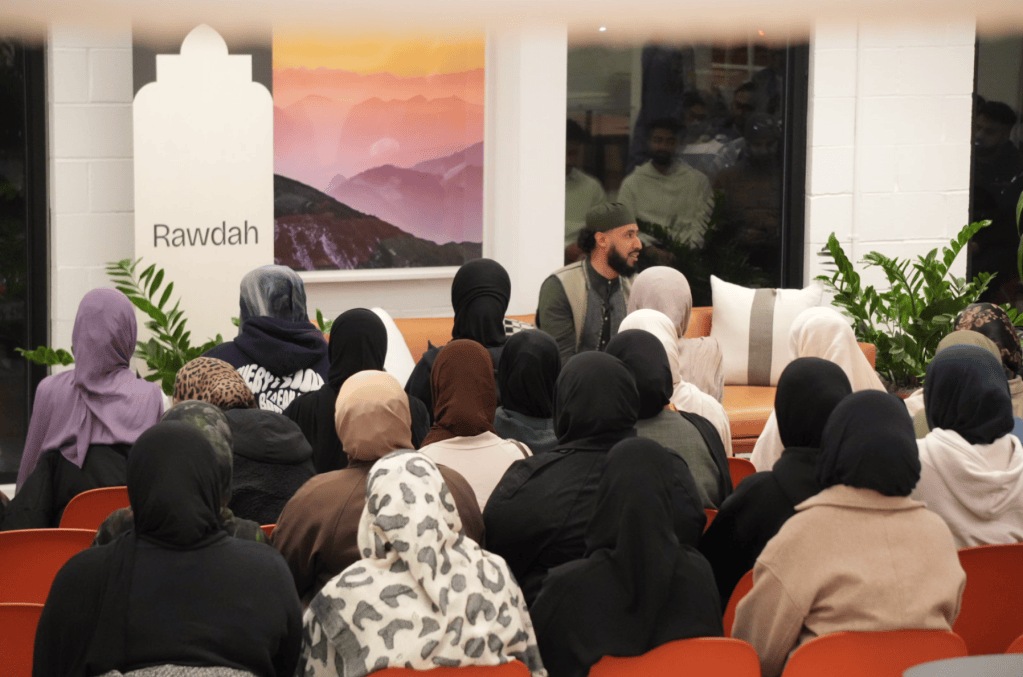
During a recent short-term study abroad, I found myself quite nervous about entering a monolithic society where my religious beliefs are not observed, nor a place where Islam is even a thought in the prevalence of people’s minds. And yet after only a day I was questioning whether Japanese people are all secretly Muslim.
There are certain similarities in people’s characters and ritualistic actions that transcend barriers between societal levels. Japan is a country long thought of as isolated, a place where its culture grew largely unchecked and uninfluenced by greater European or Eastern powers. Unconquered by the Mongols and closed to the West until 1853 (I am ignoring their trade with the Portuguese), its religion, Shinto, a form of animistic, polytheistic worship involving spirits, the natural environment, and greater kam i, had only one major outside influence: Buddhism. The two merged to produce a layered reverence that defines Japanese religious life and culture today. One can be strictly Shinto or strictly Buddhist or practice both simultaneously.
And yet despite this isolation, the Islamic parallels were everywhere… How?
وَلَقَدْ بَعَثْنَا فِى كُلِّ أُمَّةٍۢ رَّسُولًا — And We certainly sent into every nation a messenger.
Before we go further, a note. Am I approaching a nuanced religious relationship that intertwines Shinto, Buddhism, and Japanese imperial history and attempting to fit it all into my framework? Yes. Is that necessarily a rigorous academic argument? No. My goal is not to claim Islam as the origin of Shinto or Buddhism, but to highlight unique similarities between these faiths. That these similarities exist at all between faiths with no observable, historically traceable connection to Islam points to a singular origin of all religion, and how Islam most clearly serves as its unifying codification.
Some features like dedicated sacred spaces are common across all forms of worship, especially in Japan. Shrines are EVERYWHERE. You can find them on street corners, within shopping malls, and as part of national parks. An extremely strong and pervasive sense of worship has produced hundreds of thousands of shrines of Buddhist and Shinto reverence, each dedicated to one of hundreds of gods and spirits. This association of partners with God is completely antithetical to the core of Islam. And yet before entering each and every shrine or temple—before one can stand before that which they worship—purification is required. The ritual is called “temizu,” performed at a water pavilion near the entrance called the “chōzuya.” It represents the transition from the secular world to the sacred, allowing visitors to ritually purify themselves. Before we entered the Buddhist Senso-ji temple in Asakusa, we stopped at the chōzuya and used the ladle to wash our hands, then our arms, then our mouths… we had to make wudu.
The similarities were obvious to me at once, but don’t just take my word for it. This is the account of one of the first Japanese converts to Islam, Nur Muhammad Ippei Tanaka:
“In January 1924, he visited a Chinese Mosque in the province of Shandong and asked an Aheng, the religious leader of the mosque, to oversee his conversion to Islam. Thus, he became a Muslim and was accorded his Muslim name: Nur Muhammad. When he offered his first prayer at the mosque, he found that the ritual of purifying himself with water was similar to the ablutions of Shintoism, which were familiar to him from his childhood. Furthermore, he found a similarity between the chanting of the verses of the Holy Koran and nenbutsu (or nianfo in the Sanskrit language), literally the prayer chant to Amida Buddha in Mahayana Buddhism, which was familiar to him as a religious act from his childhood. These simple affinities led him to develop the syncretism of Shintoism and Islam.” – Misawa, N. Shintoism and Islam in Interwar Japan: How did the Japanese Come to Believe in Islam? ORIENT Vol. 46, 2011.
It was apparent in the way that religious life permeated the historical fabric of Japanese existence. The sheer number of dedicated shrines reflected a deep historical tradition of connection to the spiritual realm, one embedded so thoroughly into the culture that it persists even as formal religious belief has declined.
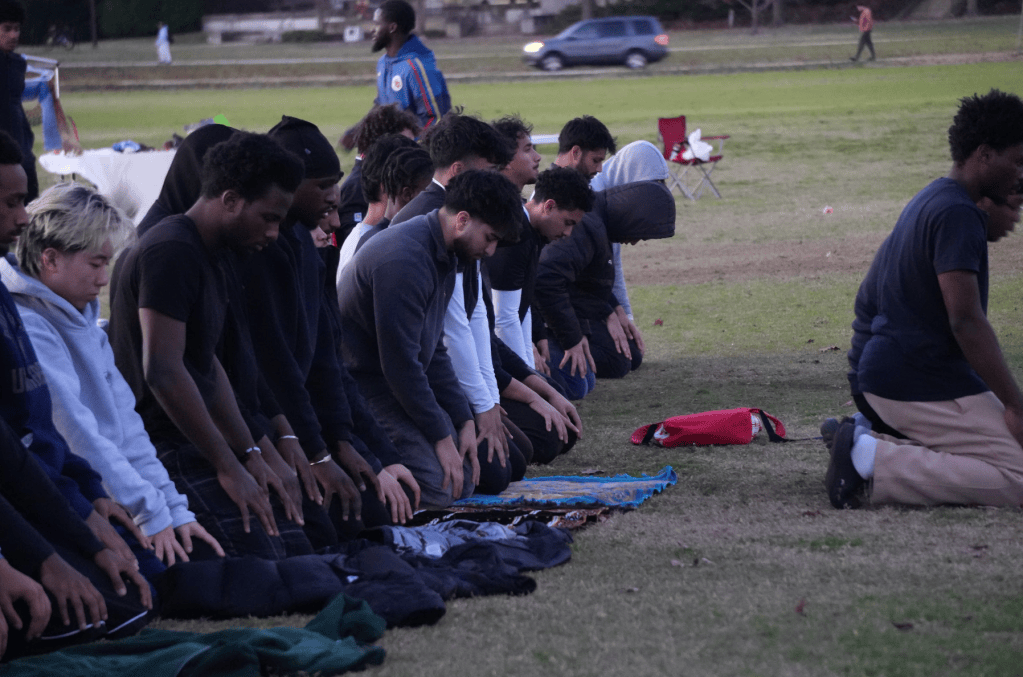
According to a 2009 survey, approximately 43% of Japanese homes contain a kamidana: a miniature household shrine where daily offerings and prayers are made to the enshrined kami. The parallel to the Muslim world is not simply the permeation of mosques throughout any Muslim environment. It is the idea that sacred space does not stop at the door of a dedicated house of worship. It does not stop in the deepest part of the mountains, or in the middle of a city center, or inside a shopping mall. The entire earth has been made a place of prayer (Sunan al-Tirmidhī 317), and even without knowing that hadith, an entire (semi) isolated civilization put that in practice.
One of the defining features of our trip was the emphasis on cleanliness. From the metro to the hotel, every space was characterized by a level of cleanliness that could only come from a deep collective respect for the rights of others and that of the shared space. This to me seemed the ideal Islamic scenario: where the respect one has for God’s creation is so strong and so unifying it holds you responsible for maintaining every place at a level of cleanliness. It is the kind of respect we are taught to have but that is yet to be fully seen. Japan here serves as a model for Islamic life. After all, we preach cleanliness is half of faith. Here was a place where you could see what that actually looks like in practice, lived out at scale, without it being explicitly religious at all. Japan is less a comparison and more an uncomfortable mirror because it shows what we are capable of and have largely not been able to do.
This reverence for the world stems directly from Shinto’s animistic theology, where each kami represents a spirit or element of nature: rivers, mountains, forests, and animals. All of it stems from the same idea of reverence for the world as a creation. That reverence shows up in Japanese culture in ways that have long outlasted formal religious belief, from zen gardens and bonsai to the practice of shinrin-yoku, or forest bathing.
(Some lighthearted information for your reading pleasure: Dr. Qing Li, a Japanese immunologist and founder of the field of forest medicine, demonstrated that forest bathing significantly boosts the human immune system through the inhalation of phytoncides released by trees. This leads to increased levels of anticancer proteins and NK immune cells. Go learn more for yourself: https://engineerine.com/forest-air-supercharges-you/)
Forget the parallels. In many ways, Japan is more Muslim than some Muslims. Allah appointed mankind as His khalifa, steward and vicegerent of the earth (Quran 2:30), and commanded that we not cause corruption in it (Quran 2:60). So what are we Muslims doing as vicegerents? In Japan we toured ecological research facilities and saw infrastructure built around climate science, electric vehicles, hydrogen energy, and entire industries oriented around reducing human harm to the planet. A society that understands its role as steward of the earth WITHOUT religious texts telling it to do so. It is our responsibility to emulate these practices not merely because we are Muslim but because we have been explicitly commanded to.
4: Surprise, there’s a fourth section.

As you can tell I like logical proofs and deductive reasoning.
Dealing within the Islamic paradigm: God exists, and God personifies all 99 of his attributes. God is therefore the most just. God states: “And never would We punish until We sent a messenger” (Quran 17:15). Allah cannot commit injustice and cannot sentence someone without having first sent them a messenger. Therefore, Allah must give everyone a chance. Every nation and every person individually has been given one. Whether or not we are aware of it, it must exist; it follows deductively from God’s own attributes.
I started this by asking why Islam isn’t universal and the dominant religion. The answer is that it is universal, and it doesn’t need to be the dominant religion. God’s justice does not require our awareness of how He delivered the message. Every person has been reached in some form. It is simply our duty to travel throughout the land to learn, see, and spread the irrefutable proof of Islam as the religion of Truth.
Image credits: Cover photo by Amna Tariq for Al-Hikmah.
 Al-Hikmah
Leave a comment