
By: Sulayman Khan
For Al-Hikmah
Sulayman Khan is a bioengineering student at the University of Maryland and President of SCALE, a student organization that advocates for underserved elementary school students by hosting science competitions to spark interest in STEM.
Across the Muslim community’s institutions, schools, mosques and nonprofits alike, a pattern incredibly dangerous to ignore has emerged. Fundraising has become not just a financial strategy but a cultural fixture that is increasingly dependent on the congregation. What began as a noble mission to sustain a community endeavor has gradually shifted into a model that now warrants serious concern: a continual unethical practice that demands and relies on the very people it is meant to serve — especially its youngest and most devoted members — to survive.
Islamic private schools built on sacrifice and community investment are worth celebrating. They represent a genuine belief that Muslim children deserve an education rooted in their faith and values. But they are also worth examining, especially when the methods used to keep them running begin to contradict the values taught inside the classroom.
The gamification of student fundraising in these private schools is one of the clearest examples of this. When children who have yet to mature are pitted against one another, class against class and student against student, all in the name of raising money, the nature of the act changes entirely. Instead of the cause it becomes about winning. Prizes are dangled, social pressure builds — and what was once a communal activity becomes a source of stress, animosity and embarrassment for students who cannot collect as much as others. A competition that should encourage donations can just as easily breed resentment.
When a school’s operating model requires children to solicit donations from family members, neighbors and community contacts on a recurring basis, it becomes an excessive burden on the youth. Parents enroll their children in these schools because they believe in the mission, not to become its fundraising apparatus. And yet, that is increasingly what the model asks of them. Some students internalize this pressure silently. Others distance themselves from the institution entirely once they are old enough to do so. Using children to carry the weight of the institution’s survival is a dangerous and exploitative practice that is often not even consciously realized.
Former (and current) students regularly describe feeling used, pressured and burned out by the fundraising culture they grew up in. When alumni carry resentment rather than fondness toward the institution that raised them, that is not a minor problem. It demonstrates how the experience itself is causing harm. When an institution’s own graduates speak against it, it begins losing what no campaign can replace: trust.
This is quickly snowballing into a greater issue. Walk into any mosque during Ramadan and you’ll see the same thing: the congregation, there for worship, already tired, held captive between isha and taraweeh while a 30, 40, sometimes 60 minute fundraising appeal plays out in front of them. The khutbah was about donating. The appeal after was about donating. And somewhere in between, the spiritual goals of the night are compressed into the time remaining. Sadaqah (voluntary charity) is between you and Allah SWT and yet it has become a joke online of resigned familiarity. Unfortunately, Sadaqah has become something strategically extracted from people strategically prevented from leaving.
This unethical pattern extends beyond our communities. Large humanitarian nonprofits regularly use images of vulnerable people — a child in distress, a family in crisis — to tell their story rather than the story. The firestorm surrounding Sharbat Gula, the young Afghan girl photographed by National Geographic at ten years old without her consent, illustrates this precisely. Her image became one of the most recognized in the world, yet she never agreed to become a symbol nor did she benefit from the emotional and philanthropic response it provoked. When a child’s face or a family’s hardship becomes a fundraising tool, people are turned into instruments for emotional gain. To protect our institutions from perpetuating this, we must critically analyze our methods and their exploitative potential, imposed consciously or not.
This raises the commonly posed question: why does so much depend on these campaigns in the first place? Building infrastructure costs money: paying staff and administration and supplying honoraria are all legitimate needs. But repetitive, continual dependence on donations is not the Islamic model. The waqf or an endowment established as ongoing charity, generates income and sustains itself through its revenue streams. It inherently protects communities from donor fatigue and endless campaigning. The Qarawiyyin in Fez, the oldest continuously operating university in the world, was founded by Fatima al-Fihri in 859 CE as a waqf ; it did not survive twelve centuries by passing pledge forms through a congregation. Great Islamic institutions like the Süleymaniye Camii in Turkiye were built as entire community complexes, not just as mosques. Built on models of mudarabah (profit-sharing) and musharakah (joint ventures), they were never dependent on the congregation on a day to day or month to month basis. It is worth asking seriously why more Muslim institutions in America are not built on (or eager for) sustainability.
None of this is to say that community members do not want to give — we do, we have genuine love for our institutions, genuine belief in what they represent, and a sincere desire to see them thrive. That goodwill, however, is not an unlimited resource, and it is not strengthened by being constantly drawn upon. When the ask becomes continual instead of it being annual or quadrennial (most student organizations are exempt from this analysis) community members begin to feel less like supporters and more like a resource. Which again poses the question: why aren’t our donations sustainable? Why aren’t we building toward a waqf?
An organization’s legitimacy is determined by the methods used to pursue it. So often our institutions rely on the labor and emotional weight of our most vulnerable: children. We rightly condemn systems around the world that exploit children or place them in labor. While the circumstances are not equivalent in severity, the underlying mechanisms deserve scrutiny. The cause may be noble, but are the methods? Just as no child should be placed in a role they cannot choose, nor should any community feel pressured, coerced, or manipulated for the sake of sustaining a mission. To better serve our communities and the world around us, we must stop using storytelling as a tool for manipulation. We must stop exploiting children especially in ways that pressure them to solicit or extract donations. And we must stop taking advantage of the very community we claim to uplift at every turn.
We must critically analyze not only how we ask for donations, but also why and when we do so.
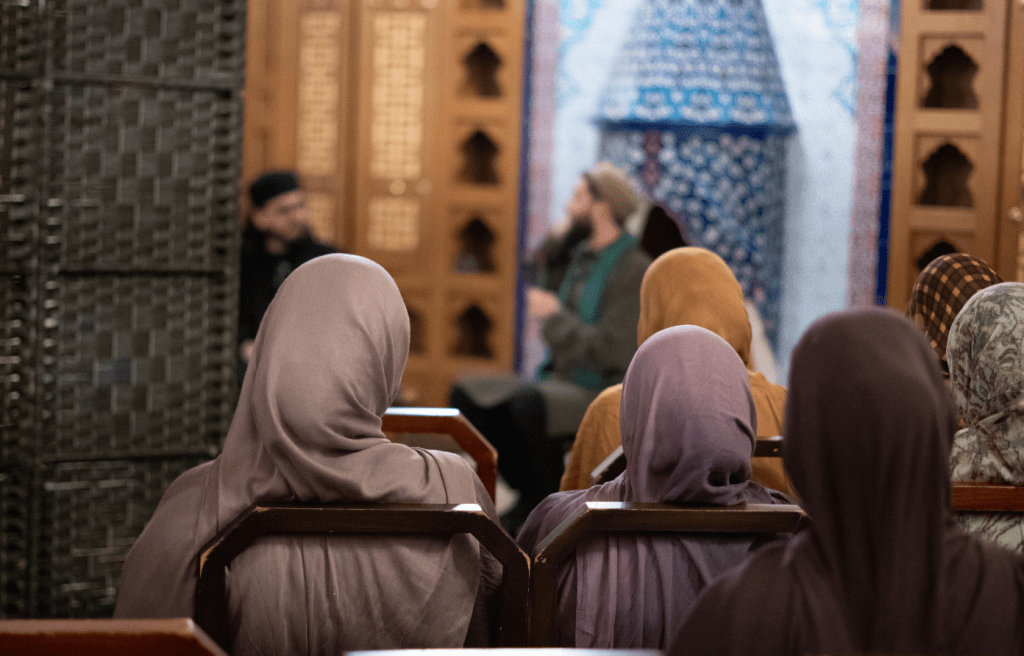
Image credits: Cover photo by Amna Tariq for Al-Hikmah.
 Al-Hikmah
Leave a comment