
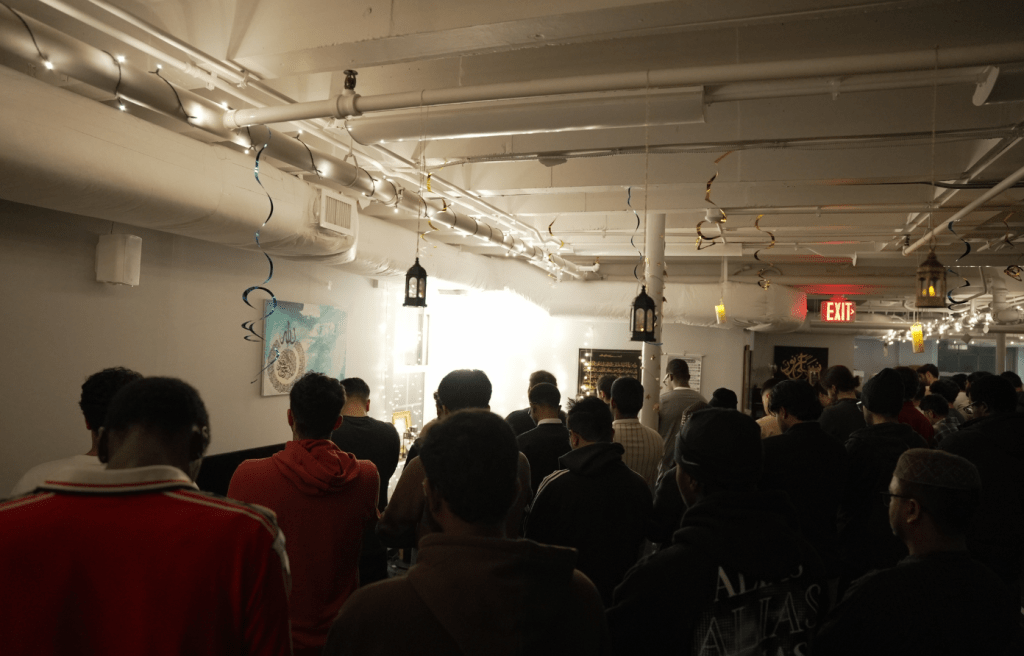
As the first days of Ramadan unfold, Muslim students have changed their daily routine. Muslim students across campus are partaking in a month filled with fasting and worship alongside their usual duties as a college student.
Ramadan is the ninth month in the lunar Islamic Calendar. Its arrival marks a holy month for Muslims in which they fast from before sunrise until sunset. It’s a time for Muslims to connect with their faith, increase their acts of worship such as reading the Quran, work on self-discipline and reflection, and foster community.
“Ramadan always brings the community together in a special way, and I’m looking forward to that energy again,” Rayn Ali, vice president of this university’s Muslim Student Association, told Al-Hikmah in a statement.
Suhoor or sehri is the recommended meal Muslims eat before they begin fasting each day; it helps to sustain their fast throughout the day. Many find it hard to eat large amounts of food in the morning, so smaller snacks such as yogurt, nuts and water are typical.
UMD Dining Services offers suhoor to-go meals. Students can register for these meals by going to the UMD Dining Services page and clicking on the yellow “Ramadan Box” on the home page. Once signed up for your desired day, meals can be picked up after 5 p.m. at South Campus Dining Hall or 251 North Campus Dining Hall.
The Senior Executive Chef for campus dining services, John Gray, confirmed to Al-Hikmah that the meals are halal. “They’re actually zabiha-halal [hand-slaughtered], and inside the bag [we] give them a flyer to the company that we purchased all the products from,” he said.
UMD attempts to make this process as simple as possible, Gray told Al-Hikmah, and he asks one thing from students: “You know, just check your schedule. Make sure you’re able to pick up that meal between 5 and closing— so that we’re not wasting food.”
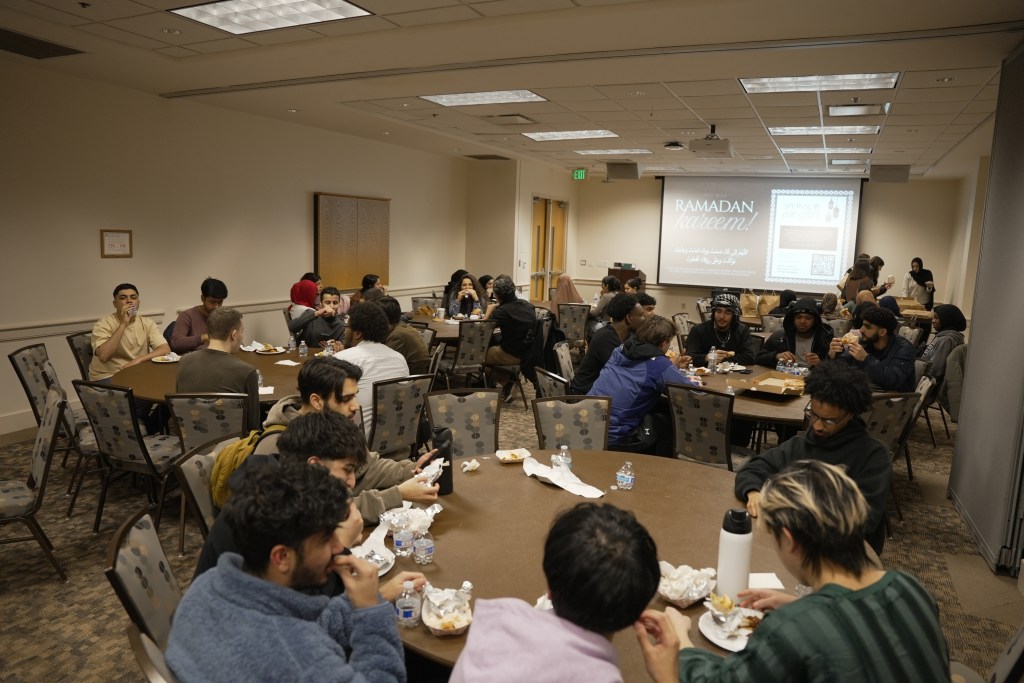
Iftar is the meal Muslims break their fast with after sunset. Muslims typically open their fast with water and a date, pray, then return to eat a main meal. UMD MSA offers free iftars on several days throughout Ramadan in STAMP. The organization also collaborates with other campus Muslim organizations to host larger iftars.
Students break their fast with water and dates in the Cole Field Musallah then pray Maghrib – the prayer offered during sunset time – at around 6 p.m. On days with MSA iftars, students head to STAMP after prayer.
Community can be something very hard to achieve, especially if you don’t have many Muslim friends or acquaintances. Yasmin Kotb, a current sophomore, recommends going to the MSA-sponsored iftars to foster a better sense of community during the month.
“Go to all of the MSA iftars, that’s where a lot of people make new friends. That’s where I like to get closer with a lot of other people,” she said. “Ramadan is really the time where you can meet new people and really have Muslim friends, and that’s something really important as a Muslim: to have a good community around you.”
Taraweeh is the optional prayer that happens only during Ramadan. It comes after Isha, which is the fifth fard (required) prayer of the day. Students can pray taraweeh in the Musallah, which begins at 8 p.m. every day.
With all the events MSA has on its official calendar, students can look forward to a great time making new friends while strengthening their faith.
Ali emphasized the importance of community during Ramadan, encouraging Muslim students to become more involved with the MSA during this month.
“Getting to know other Muslims on campus makes everything easier. Whether it’s eating iftar together at the dining hall, going out after taraweeh, or just studying together late at night, having that support system makes a huge difference.”
Image credits: Cover photo by Hamza Muhib.
CORRECTION: A previous version of this story mispelled Yasmin Kotob’s name.
 Al-Hikmah
Leave a comment