
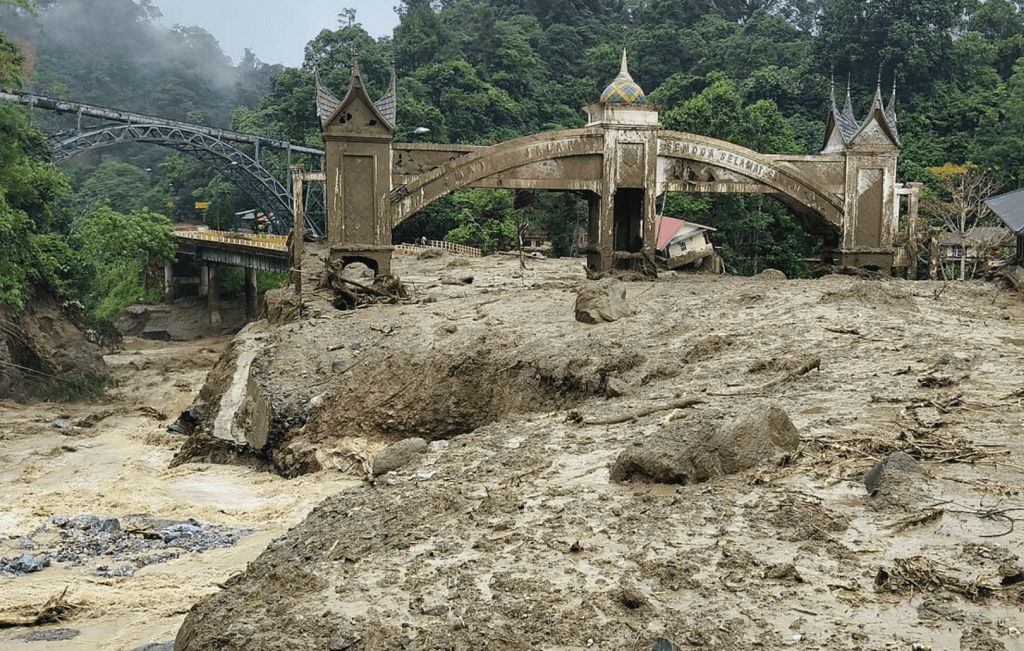
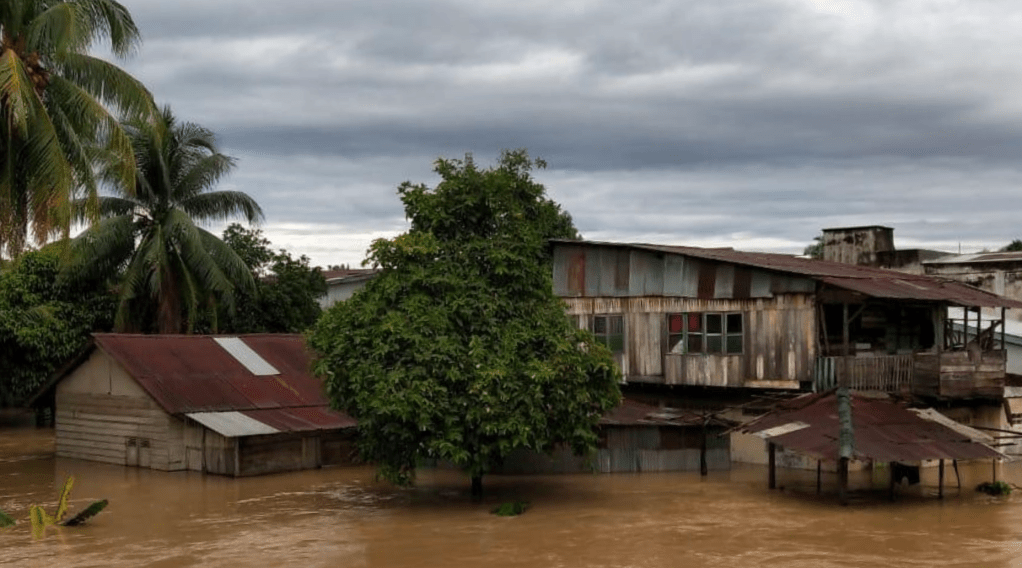
Catastrophic flooding and landslides in Indonesia in late November have killed more than a thousand people, making it among the worst natural disasters in the world this year.
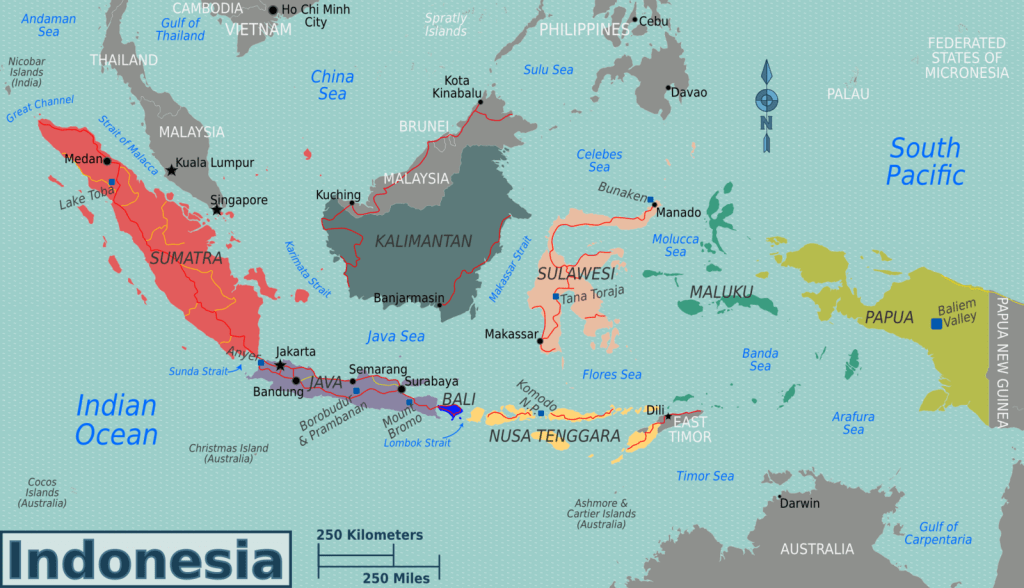
The disaster, which has displaced more than a million people in Indonesia and injured thousands, tore across Sumatra island, burying entire villages under mud. Debris from the destruction has slowed the country’s emergency response system.
Many Indonesian students at UMD feel the impact of the devastation as Indonesia grapples with recovery efforts.
“It feels personal to me, because almost all of my extended family lives in Indonesia,” said Najma Arfa, a freshman information science major whose family hails from Jakarta, Java, a separate island in Western Indonesia. “Disasters in Western Indonesia always feel close to home.”
Yuki Jatmiko, a senior plant biology major, said she watched social media videos of people climbing onto their roofs to escape the flooding. “I was kind of crying with them,” she said.
Jatmiko said that although heavy rains in Indonesia are not surprising, this instance of flooding and landslides felt unusually strong.
Gerry Andhikaputra, a second year Ph.D. student, told Al-Hikmah the floods were a “catastrophe of unprecedented scale.”
“The 2025 Sumatra floods were not just another seasonal disaster,” the epidemiology and biostatistics student wrote. “Extreme rainfall alone does not explain the scale of destruction.”
Indonesia’s death toll alone exceeds the total death toll of the other Indo-Pacific countries hit by the cyclone, according to United Nations (U.N.) news.
“The storm was rather anomalous, bringing heavier precipitation than usual,” Thomas Hilde, a research professor and director of the Indonesia and Peru programs at this university’s school of public policy told Al-Hikmah. “But what made the floods in Sumatra so disastrous was basically deforestation.”
The mountainous provinces of Aceh, North Sumatra, and West Sumatra, which were hit the hardest, have some of the richest remaining rainforests in Southeast Asia that have been under threat of expanding oil palm plantations, legal and illegal logging, and mining, Hilde wrote to Al-Hikmah.
Those actions weakened the land’s ability to absorb water and caused soil erosion, according to Hilde.
“When the rain came, it basically caused landslides and the huge volumes of water collected everything in its path: mud, logs, rocks, animals, and vulnerable trees. And that’s what came rushing down mountains and hillsides and through the many small villages of the region,” wrote Hilde.
Hilde told Al-Hikmah there’s evidence that flood and landslide areas correlate with deforested mining areas. The Indonesian government said they are investigating companies responsible for mining practices in those areas, according to Reuters.
“It’s not like this is an unknown threat in Indonesia. But the government has been slow to regulate that which is under its responsibility … and has often been neglectful of other practices, like logging the rainforest,” Hilde wrote. “You have to hold policy accountable as well — and, where the laws do exist to protect the forest, genuine enforcement of those laws.”
Jatmiko said government corruption and lack of regulation worsened the crisis, citing the current and previous Indonesian president’s work with palm oil plantations.
“There’s a bad level of corruption [in Indonesia,]” she said. “It’s unfortunate that all the people that are living in [Sumatra] are now getting affected by the actions outside of their control.”
“The Sumatra floods should be seen as a warning of what happens when climate change meets unchecked environmental degradation,” Andhikaputra wrote. Changes in environmental governance, ending land degradation practices and a better emergency response system in Indonesia are needed, he wrote.
“I feel devastated, but I also feel like it’s a warning,” Arfa said. “Unless serious changes are made … unfortunately, I don’t think this will be the last time you see something like this.”
In a statement to Al-Hikmah, UMD wrote that International Students and Scholars Services shared a message with F-1 and J-1 Indonesian students about the flooding, and the Dean of Students Office offered support and resources to students including the Counseling Center and other mental health resources.
Some students like Arfa said it was good that UMD was aware of the flooding and reaching out to international students but others felt the university’s actions weren’t enough.
Andhikaputra told Al-Hikmah that UMD’s “absence of a broader official statement feels insufficient given the scale and significance of the disaster.”
“As a university that emphasizes global engagement and climate leadership, UMD had an opportunity to publicly express solidarity, raise awareness,” he wrote. “Not doing so feels like a missed opportunity to align institutional values with real-world events.”
Jatmiko said there’s a lack of awareness of the flooding among UMD students. “It would just be great for [UMD] to be able to spread awareness about it,” she said.
Hundreds of people remain missing after the Sumatra floods. Cars were overturned, water supply pipes shattered, and entire houses swept away by floodwaters.
While Andhikaputra and Arfa pointed to Indonesian government reform as a possible avenue to mitigate the scale of future disasters, Jatmiko said she also wonders how Indonesian people living abroad in America and elsewhere in the world are taking action to help victims of the flooding. She also spoke about the importance of the Muslim community.
“As an ummah, I feel like [Muslims] should help each other whenever one of us is in trouble,” said Jatmiko. “I think it would just be great if we also receive help from other Muslims.”
Donations for Indonesia flood recovery efforts can be made to Helping Hand for Relief and Development.
Image credits: Destructed infrastructure is under layers of mud and debris after the 2025 flooding in Indonesia and Southeast Asia on Nov. 27, 2025. Photo by Iwan and uploaded by Rahmatdenas, used under CC BY 4.0. [Link to original image.] License details: CC BY 4.0 License. Cropped from original.
 Al-Hikmah


Leave a comment