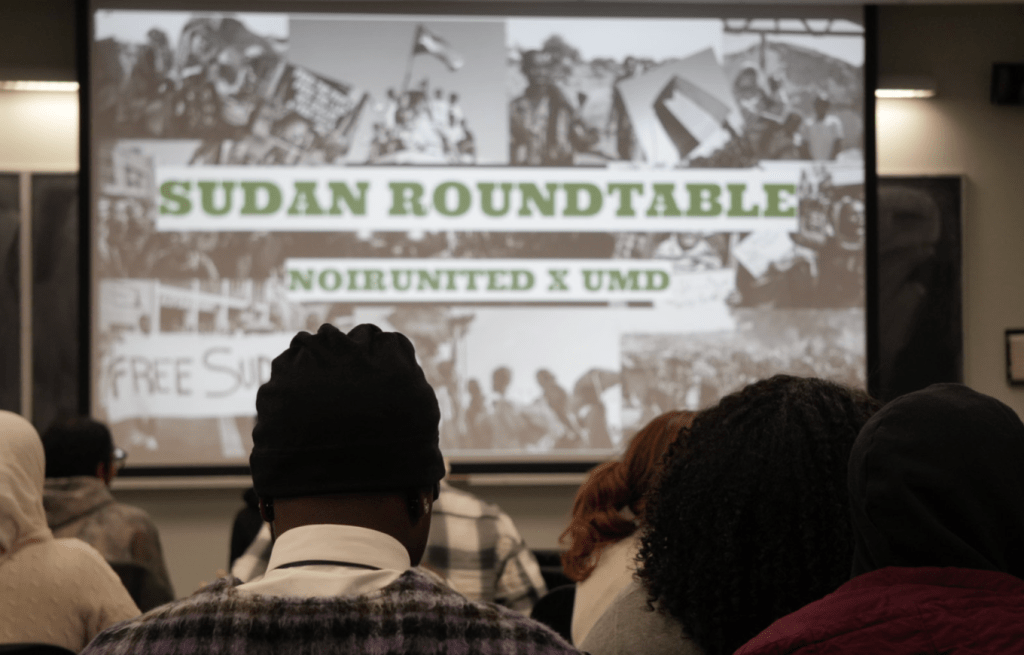
NoirUnited International, a 501(c)(3) global development organization focused on mobilizing the African diaspora, hosted a Sudan Roundtable in collaboration with multiple student organizations, including Sudanese Student Association, African Student Association, African Students United for Progress, Students for Justice in Palestine, and Helping Hand for Relief and Development on Thursday, Nov. 6.
The roundtable featured a speaker, a documentary screening, and a group discussion led by NoirUnited organizers. Ibrahim Alduma, a human rights advocate who works in international development, opened up the event with a brief history of the current genocide in Sudan.
Alduma worked in Sudan after the 2019 fall of former Sudanese dictator Omar al-Bashir before coming to Washington, D.C. to continue his advocacy. He spoke about topics including the motives behind the genocide, the lack of media coverage around the Sudan crisis, and ways for students to help.
The Sudan war broke out in April 2023 after the 2019 fall of former Sudanese dictator Omar al-Bashir. The war is a power struggle between the Sudanese Armed Forces (SAF), the country’s official military and the Rapid Support Forces (RSF), a paramilitary group founded by al-Bashir in an attempt to maintain power. Over 150,000 people have been killed and over 12 million people displaced, according to the BBC.
The RSF has been accused of genocide targeting non-Arab communities in Sudan. In October 2025, the RSF took control of al-Fashir, a city that was the last stronghold the SAF had in the Darfur region. The RSF committed mass killings and walled in the city, leading to famine. Recent satellite images of the city show the devastation of the ongoing genocide.
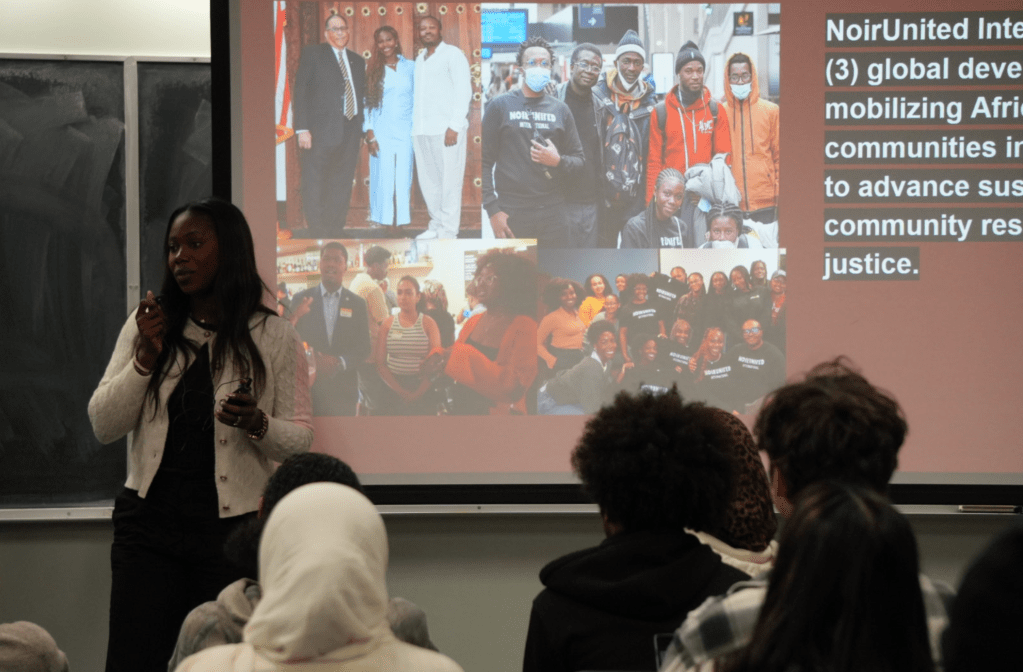
“When al-Bashir was in power for over 30 years, he did not rule the country or provide any kind of service to the communities,” Alduma said. “[al-Bashir] was mainly just using this power to steal the resources and making personal agreements with other countries like, Russia, Iran, Turkey, and the UAE, especially.”
The UAE has been found to be the primary foreign funder and supplier of arms to the RSF, which is accused of genocide and crimes against humanity by numerous human rights organizations. The UAE is also the primary receiver of gold smuggled from RSF-controlled areas, according to Middle East Eye.
The event’s documentary was produced by Basmah Elradi, a junior neuroscience major and SSO cabinet secretary. Elradi’s documentary, titled “Stories of Sudan” goes through her parents’ lives in Sudan, Egypt, and Saudi Arabia, as they were displaced between all three due to the ongoing violence. The film aims to preserve their memories of Sudan, she said.
“The reason I’m here today is because this is so close to me. Seeing the loss that my parents experienced firsthand, I’m just glad that people are finally speaking up about what’s happening in Sudan,” Elradi said. She believes that hearing the stories will motivate people to engage in efforts to end the crisis and show their support for Sudanese people.
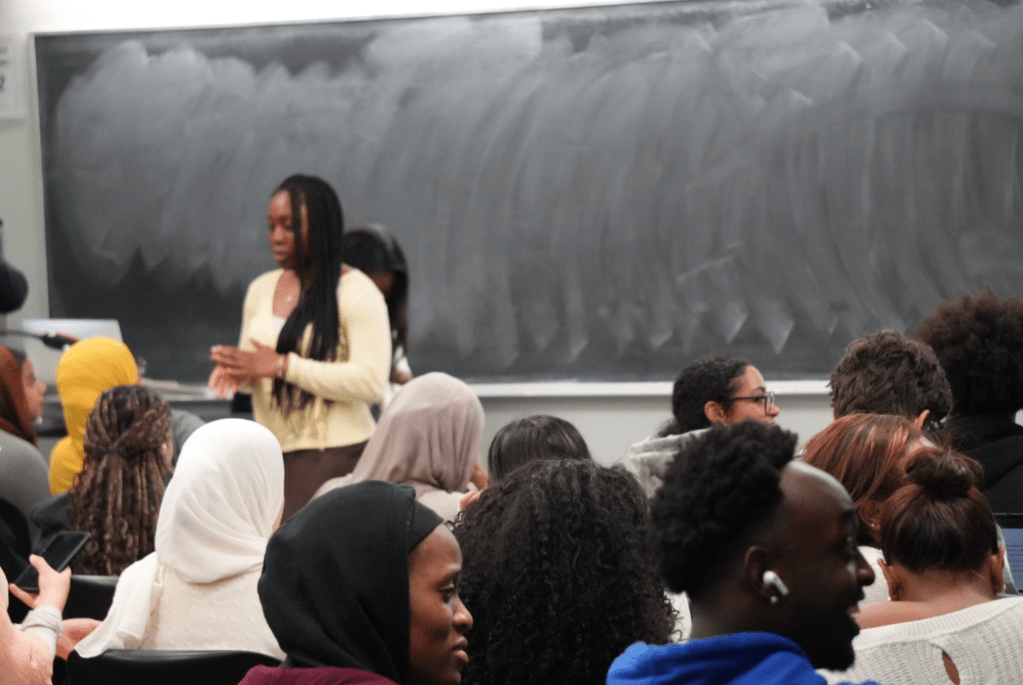
Akunna Okonkwo, a junior public health science major and research and programs volunteer for NoirUnited highlighted the urgency of this event due to the recent escalation of the ongoing humanitarian crisis.
“I wish [people] knew how grand what’s going on is. It’s a very big humanitarian crisis. It’s the biggest in the world at this moment, and it’s really important that there is immediate action from the international community,” Okonkwo said.
Alduma echoed Okonkwo’s thoughts. “There are so many issues, but people are not prioritizing Sudan,” he said.
For many attendees, the event was important for staying educated on violence in Sudan. Hamza Adawy, an attendee and a sophomore information science and international relations major, said the event gave him a deeper insight into the ongoing genocide.
Masah Farh, a junior government and politics major and attendee of the roundtable said the event was important to show support for her brothers and sisters across the globe.
“Being so far away, in the United States, you can feel very limited in how much you can do,” Farh said. “But even coming to events like this to get informed about what’s going on in other countries is really, really important.”
Image credits: Cover photo by Amna Tariq/Al-Hikmah.
 Al-Hikmah
Leave a comment