
Over 150,000 people have been killed and around 13 million people displaced in the ongoing war and genocide in Sudan, according to BBC and United Nations Refugee Agency.
The conflict, which began after the 2019 fall of dictator Omar al-Bashir, is a power struggle between the Rapid Support Forces (RSF), a paramilitary group, and the Sudanese Armed Forces (SAF), the country’s official military. Both groups have been accused of war crimes and crimes against humanity, according to the US Department of State.
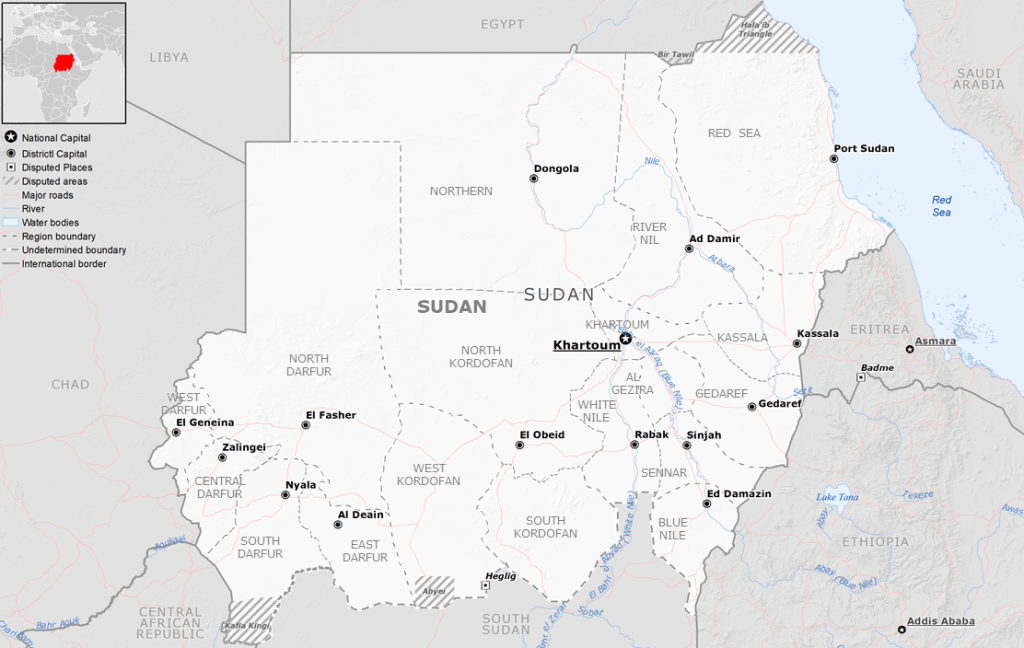
The RSF took control of the city of al-Fashir in late October 2025, committing mass killings and walling the city in, subjecting citizens to starvation. al-Fashir was the SAF’s last stronghold in Darfur; the RSF’s takeover of the city marked a turning point in the ongoing war.
This is not the RSF’s first campaign of violence in the Darfur region.
The RSF developed from Janjaweed militias who committed the 2003 Darfur genocide with al-Bashir’s support, where over 200,000 non-Arab Sudanese people were killed with an additional 2 million people displaced.
In the current war, the RSF has been accused of committing genocide against non-Arab Sudanese people in the Darfur region.
“Not a lot of people are educated on the genocide in Sudan,” said Mattab Elbashir, a sophomore public health policy major and public relations officer for UMD’s Sudanese Student Organization (SSO). “We need to bring awareness because many people don’t know about it.”
International humanitarian organizations continue to struggle to meet the needs of Sudan’s population as the genocide continues. Widespread infrastructure damage has made it extremely difficult to deliver food, medicine, and other basic supplies; an estimated 522,000 children have died of famine in Sudan since the war began.
The United Arab Emirates (UAE) funds and provides arms to the RSF, which is committing genocide in Darfur. Sudan filed a case against the UAE for complicity in genocide. The case is currently being held in the International Criminal Court, according to the United Nations.
“Everyone wants to control Sudan for its resources,” said Elbashir.
Sudan’s vast land, rich in gold, copper, and iron ore has long attracted international interest. The UAE is a primary receiver of gold smuggled from Sudan in RSF-controlled areas, according to Middle East Eye.
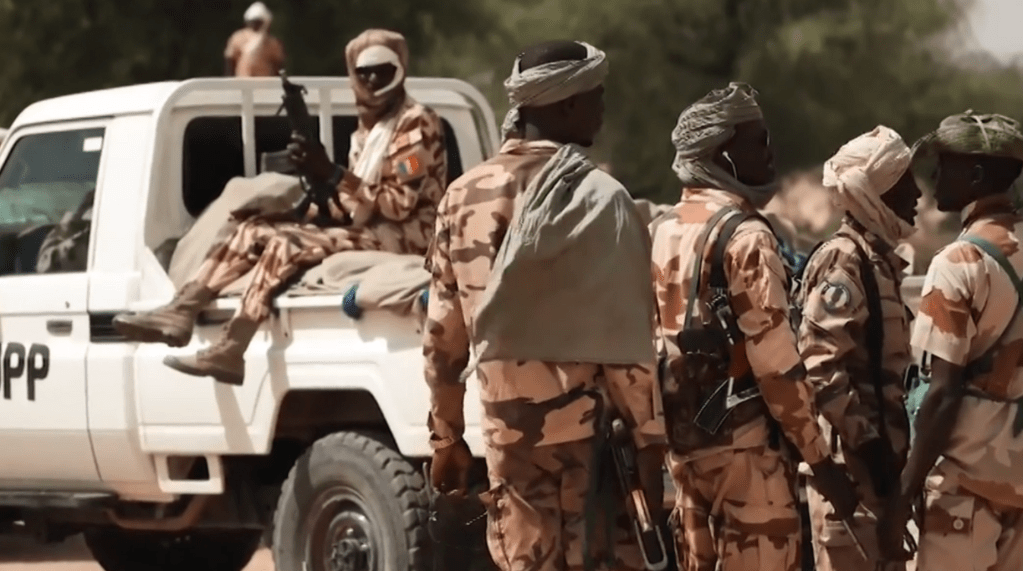
In addition to committing the 2003 Darfur genocide and the current genocide, the RSF have perpetrated systematic looting of homes and villages across the country.
“The RSF comes in, and you are forced to serve them while they loot your village and people’s homes,” said Lena Elamin, the vice president of UMD SSO and a senior English major.
“I remember waking up one random weekend morning trying to make sense of what was happening. My mom’s whole demeanor changed when she realized their house and her cousins’ homes had been looted,” said Basmah Elradi, the cabinet secretary for UMD SSO and junior neuroscience major.
Risk of sexual violence and rape in Sudan had increased 80% between 2023 and 2024, according to the United Nations.
“They go through so much trauma, they’re mentally not even there,” said Elamin.
Gender-targeted sexual violence, particularly by RSF militants near the capital, Khartoum. and in the surrounding Darfur region have been on the rise, according to Amnesty International.
Elamin, Elradi, and Elbashir’s families have all fled Sudan to escape the violence. The refugee crisis has become overwhelming as millions of citizens flee to find safety in neighboring countries including Ethiopia, Saudi Arabia, and Egypt.
For many Sudanese people, hope for a return home remains scarce. Some, like Elamin’s extended family, have fled to Qatar seeking refuge, but fail to find a path forward for employment.
“There are no opportunities there … they’re not welcome because of the racism and abuse when they seek refuge,” Elamin said. Egypt has begun deporting Sudanese refugees back to Sudan, according to The New Humanitarian.
Elbashir criticized the lack of a strong global response and noted that many nations have failed to take a stand against the RSF.
“These countries prioritize their own interests,” she said, “and that prevents the world from taking real action to improve the situation in Sudan.”
Elradi made a documentary covering the genocide for her capstone project in one of her classes. The documentary draws on the experiences of her parents, close friends and family during the ongoing violence.
“I think it’s important that we center these stories and talk to people, hear about people on the ground and figure out ways to support them,” Elradi said. “We can’t just turn a blind eye to it.”
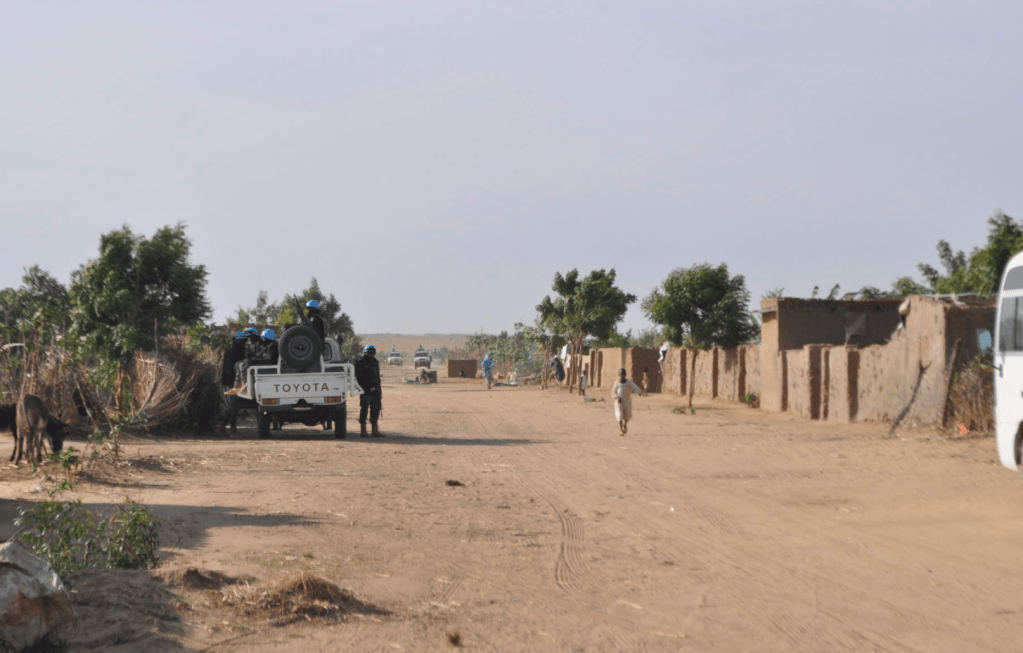
Image credits: A pathway in a camp for Internally Displaced Persons (IDP) in Geneina, West Darfur years after the 2003 Darfur genocide. Photo by Sudan Envoy, used under CC BY 2.0. [Link to original image.] License details: CC BY 2.0 License
 Al-Hikmah


Leave a comment