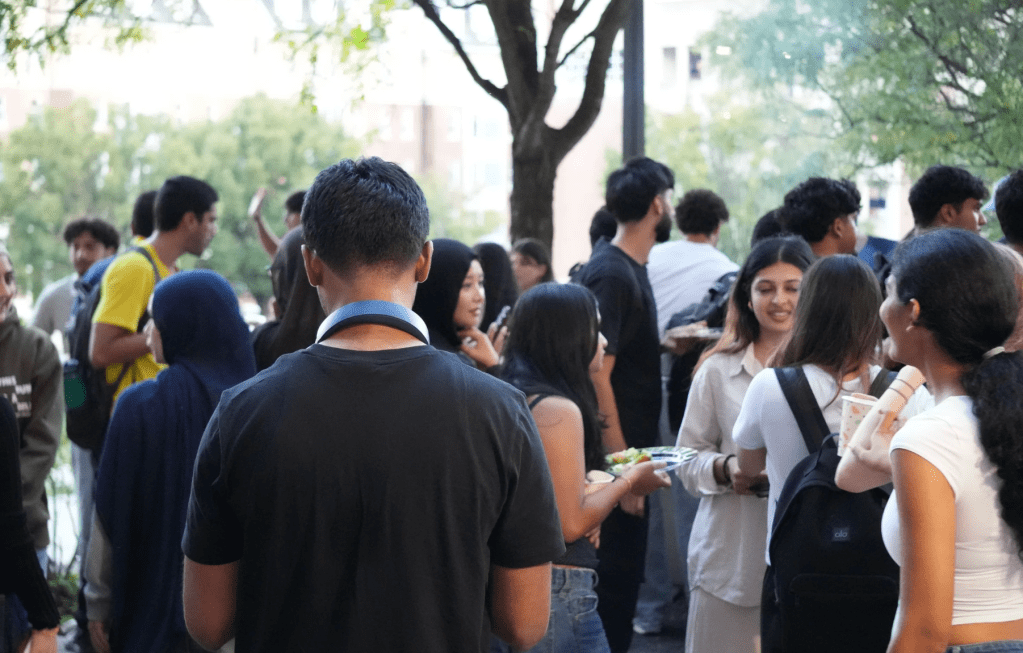
Within the past year, four new country-specific cultural clubs within the UMD Middle East and North African (MENA) community were formed.
Despite many of these clubs fitting under broader cultural clubs such as the Organization of Arab Students (OAS) or Faces of African Muslims (FAM), many students felt that these clubs were essential.
Cultural clubs from the MENA region such as the Sudanese Student Organization, Egyptian Student Association and Palestinian Cultural Club, have hosted events with big turnouts the previous two semesters. Most recently, Al Maghreb opened their cultural club dedicated to the North African region encompassing Algeria, Tunisia, Morocco, Libya and Mauritania.
Peter Wien, a professor of the History of the Modern Middle East at UMD, offered insight into this phenomenon.
“Today many people [from the MENA region] would choose their country over an Arab nationalist identity,” Dr. Wien said. “At times when regional conflicts have become so complex and complicated and so diverse, people often politically fall back on their nation state identification than on their pan-Arab identification.”
Yaara Aboelmagd, junior public health science major, and co-president of the ESA,said it’s important to have a club to focus on highlighting just Egyptian heritage.
“I feel like, because the [OAS] has different countries within it, it’s all kind of a culture clash. ESA, we really just wanted to emphasize our culture — there’s a lot that Egypt can give,” Aboelmagd said.
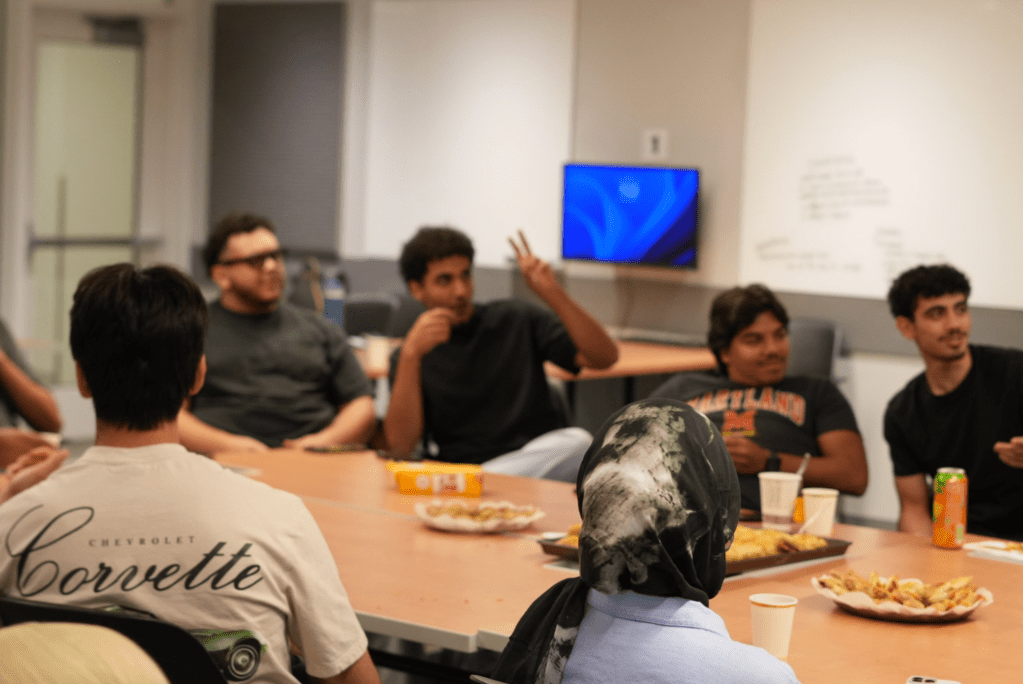
Ozuf Albogami, a sophomore mechanical engineering major hopes to open an organization dedicated to Saudi students and/or students from the Gulf region.
Albogami, who is from Saudi Arabia, shared how this desire is largely driven by her experience as an international student coming to America.
“Even if you have the same origins, there are some experiences that you cannot understand if you didn’t live in an Arab country,” said Albogami, “It’s as simple as we didn’t watch the same cartoons, we didn’t listen to the same nursery songs, we didn’t watch the same shows.”
Albogami hopes to create a space where new students can meet people from their background who lived the same childhood and understand them, she said.
Radwan Mezghanni, a senior economics major who has attended several OAS events, said he thinks broader cultural clubs allow students to create cultural organizations that are more specific to their region.
“The Arab world is a very wide geographical expanse, and it’s a very storied region of the world,” Mezghanni said. “The cultural diversity is so huge that logistically it is impossible for OAS to reflect this cultural diversity.”
Zayd Elgawhary, the president of OAS, said he recognized the importance of having these cultural spaces while maintaining unity.
“I’m Egyptian myself, it’s very important to connect with your own people,” said the junior economics major. “The diversity within us as Arabs is something that I also enjoy. I became friends with people from different Arab countries who I’ve never met before even though I grew up in the Middle East.”
Despite the separation of the clubs, Elgawhary emphasized the importance of sharing resources and supporting newer organizations.
“We have a lot of school funding. We have a lot of school recognition. We can help them achieve that as well,” Elgawhary said. “[We can] do events with them, allow them to use our resources, so we can all enjoy the campus together.”
Image credits: Cover photo by Amna Tariq/Al-Hikmah Staff.
CORRECTION: A previous version of this story misspelled the last name of Radwan Mezghanni. This story has been updated.

 Al-Hikmah
Leave a comment