
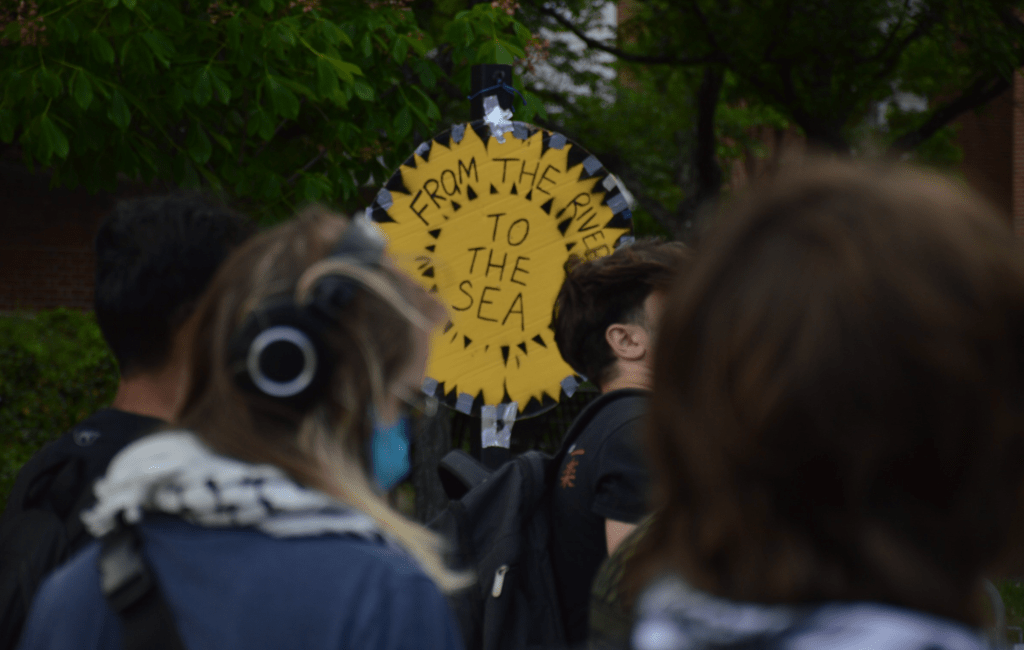
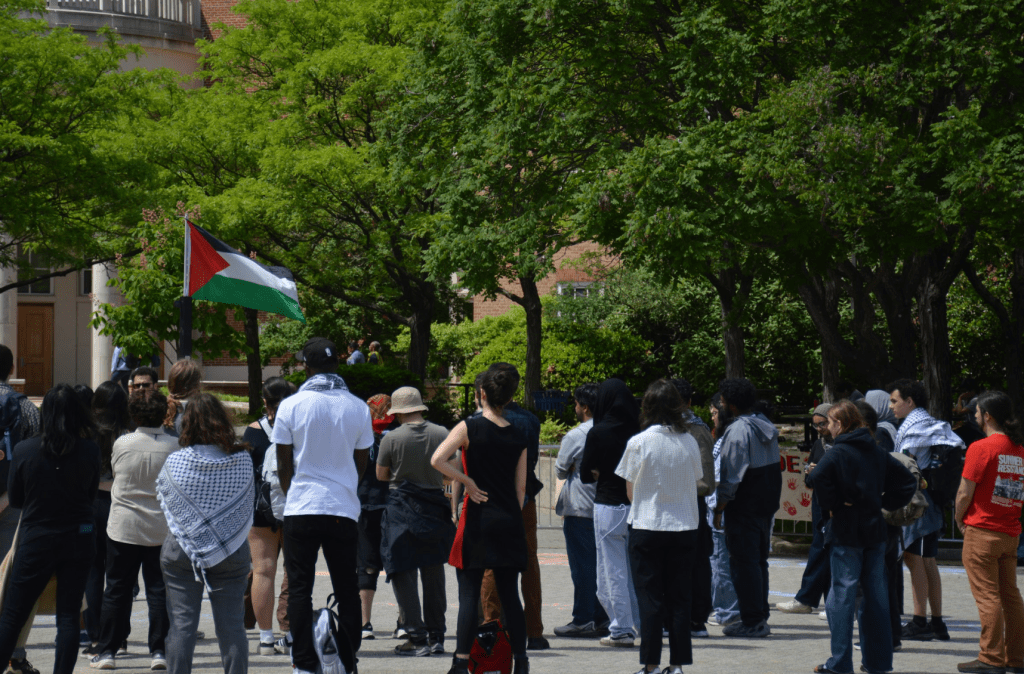
Students gather in the Hornbake Plaza for the Boycott Israel Fest protest organized by SJP on May 6, 2025. (Al-Hikmah Photo Staff) 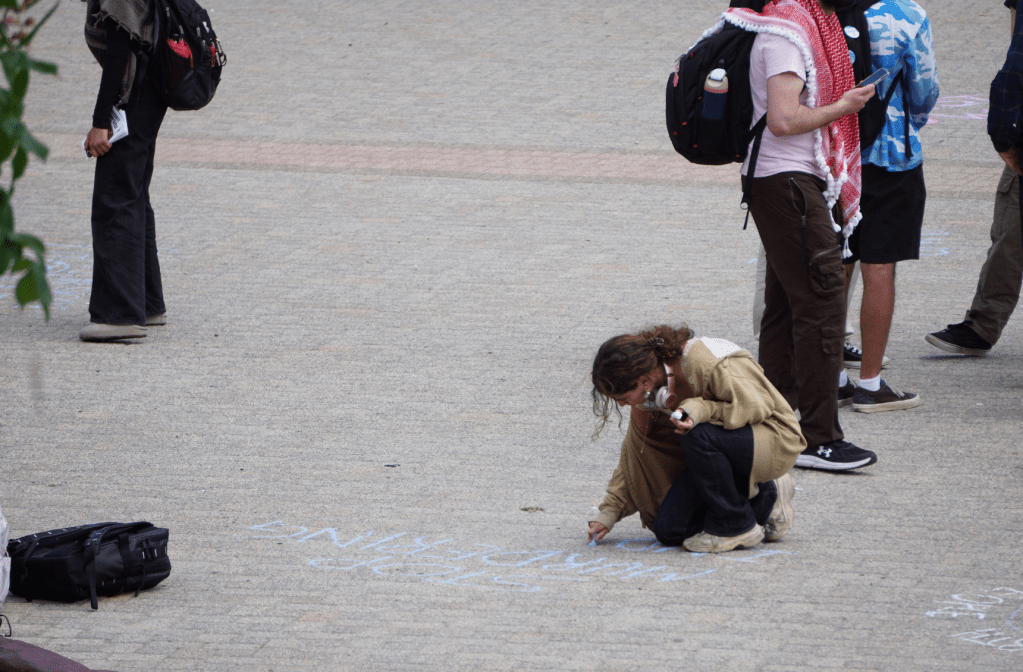
A student chalks during the Boycott Israel Fest protest on May 6, 2025. (Al-Hikmah Photo Staff) 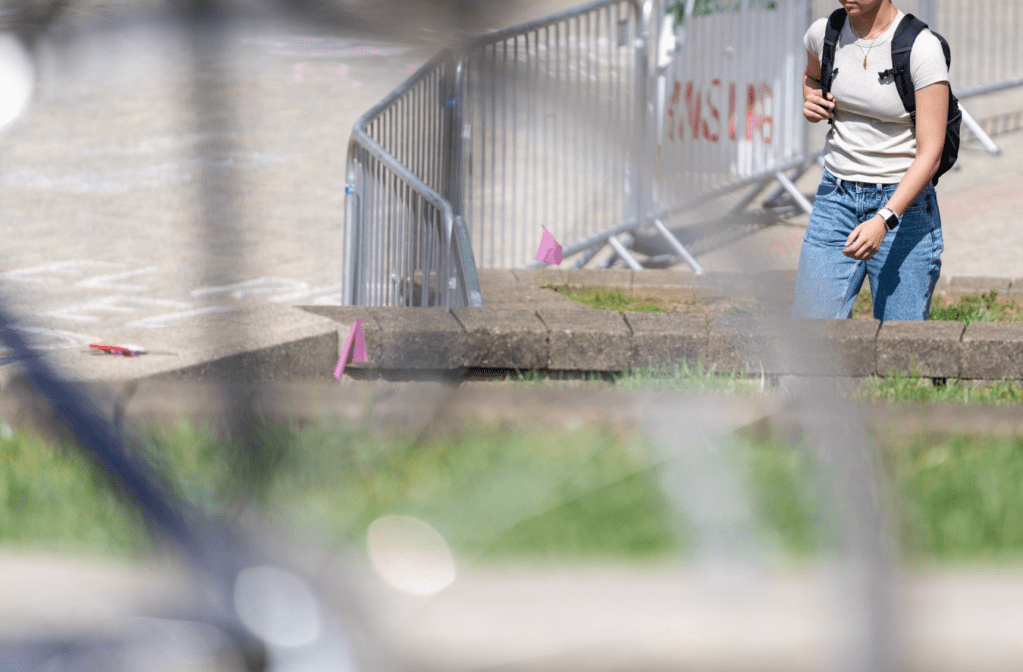
A student walks by the fenced-in Boycott Israel Fest protest on May 6, 2025 (Al-Hikmah Photo Staff) 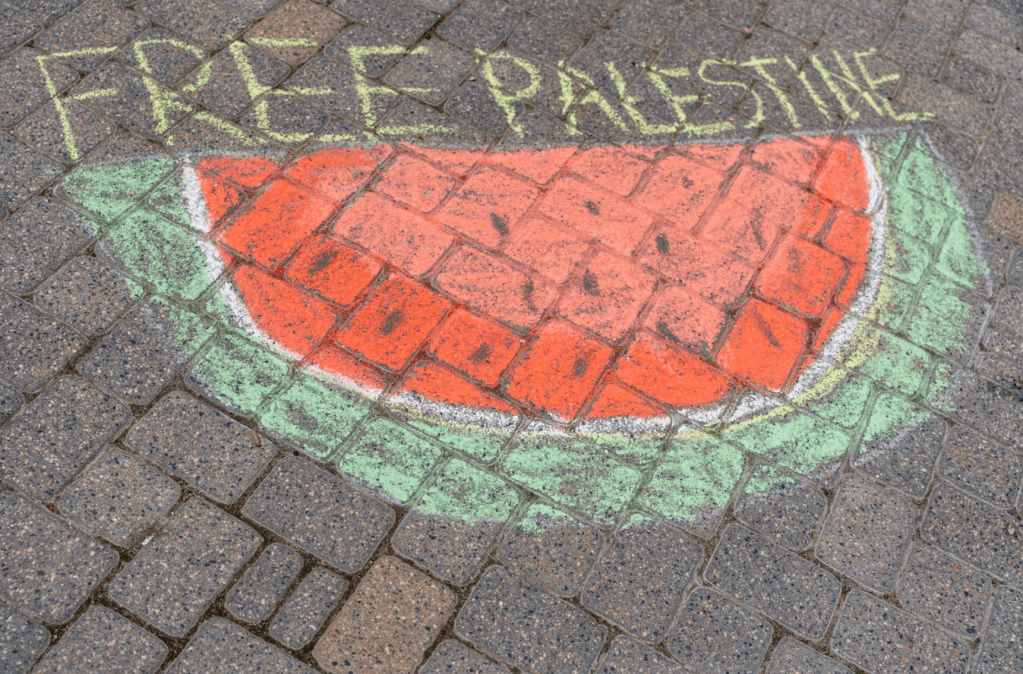
Chalk artwork reading “Free Palestine” is written in the Hornbake Plaza on May 6, 2025. (Al-Hikmah Photo Staff)
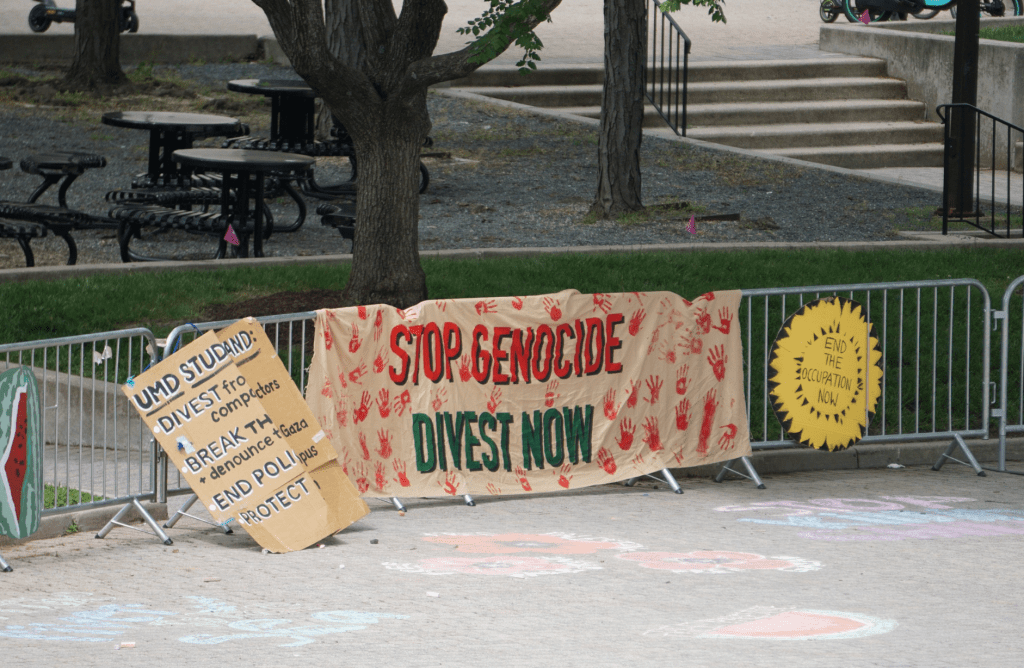
Enclosed in a circular frame of silver fences, students and faculty stood side-by-side in Hornbake Plaza for a counter-demonstration against the annual “Israel Fest” on May 6.
The protest, hosted by Students for Justice in Palestine (SJP), called for the campus community to boycott the festival, referring to it as a celebration of a settler colonial apartheid state, according to SJP’s instagram. Several human rights organizations, including Amnesty International, have also deemed Israel as an apartheid state.
“Public demonstrations like this make you more aware,” Katrina Manalang, a junior public health science major, said. “It makes global issues feel a bit closer to hold.”
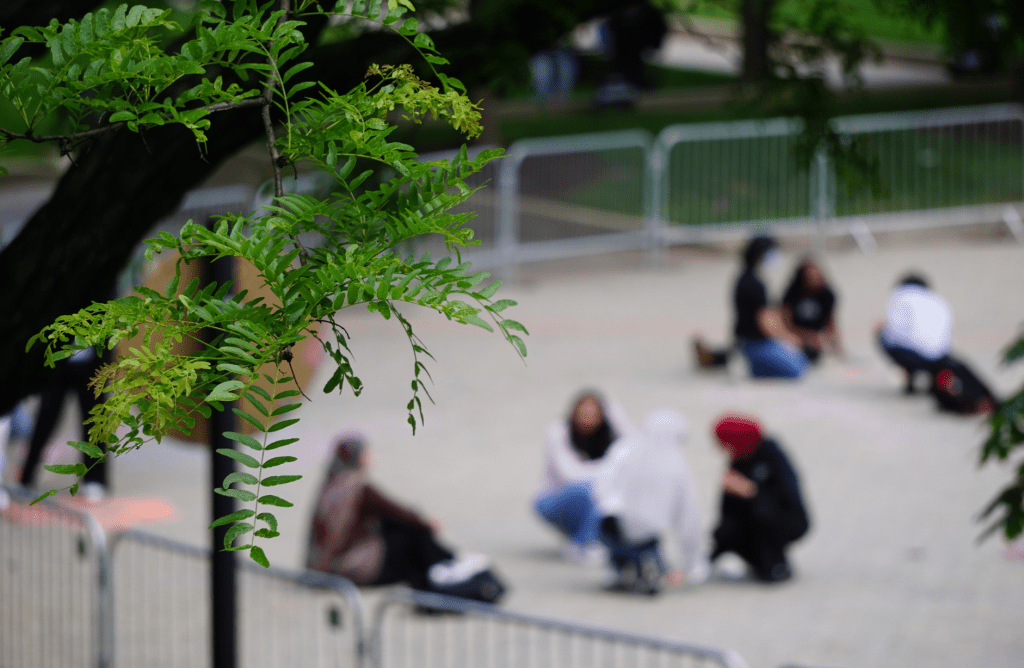
During the boycott event, students gave speeches condemning the festival and highlighting Israel’s atrocities against Palestinians, while chalking messages and artwork across the plaza—all under the watch of campus police and event security.
Attendees of either event—the protest as well as the festival—were required to pass through metal detectors and undergo bag checks.
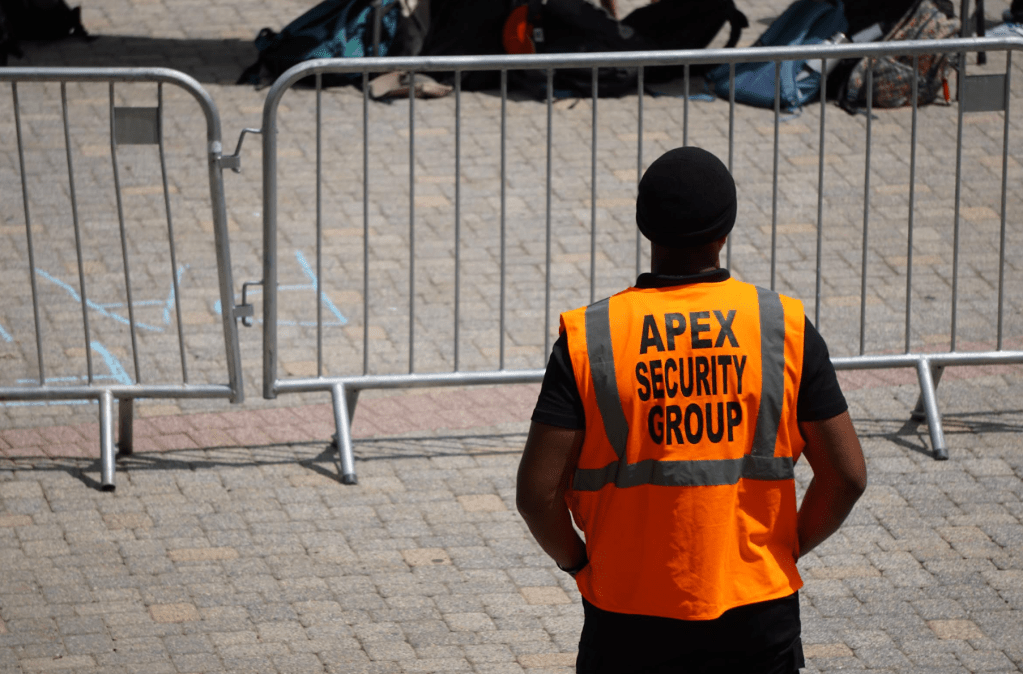
The university implemented entrance screening for campus demonstrations following the nation-wide campus protests after the events of Oct. 7, 2023, which garnered disapproval from students.
“I’ve attended, before I was even a member of SJP. There were no fences. There were no security guards. There were no police cars parked down the street from us,” Matt Foos said. “It’s becoming more and more repressive,” the junior philosophy and physics major said.
Despite the heightened security, students emphasized the sense of solidarity the event fostered.
“The designated speakers were very informative, and very uplifting. It seems like there’s a lot of coalition from the student body to come together for a conversation,” Manalang said.
“I didn’t know that this was a planned event,” biology major Danica Mei said. “It’s a great way for people to express their opinions.”
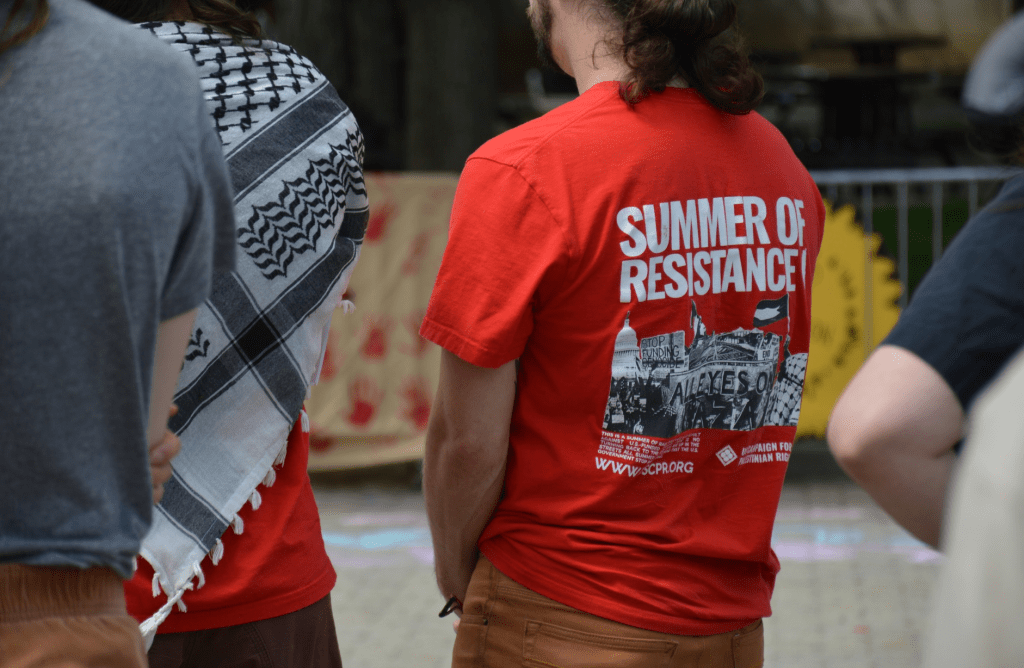
Student protestors also stressed the significance of SJP continuing to hold events amid rising tensions.
“It’s always very inspiring to see SJP and other students have courage to keep showing up—even in the midst of how powerful Zionism is—I think it’s really important,” Saanvi Kataria, a sophomore computer science major, said. “I hope to keep seeing [students] be stronger and stronger.”
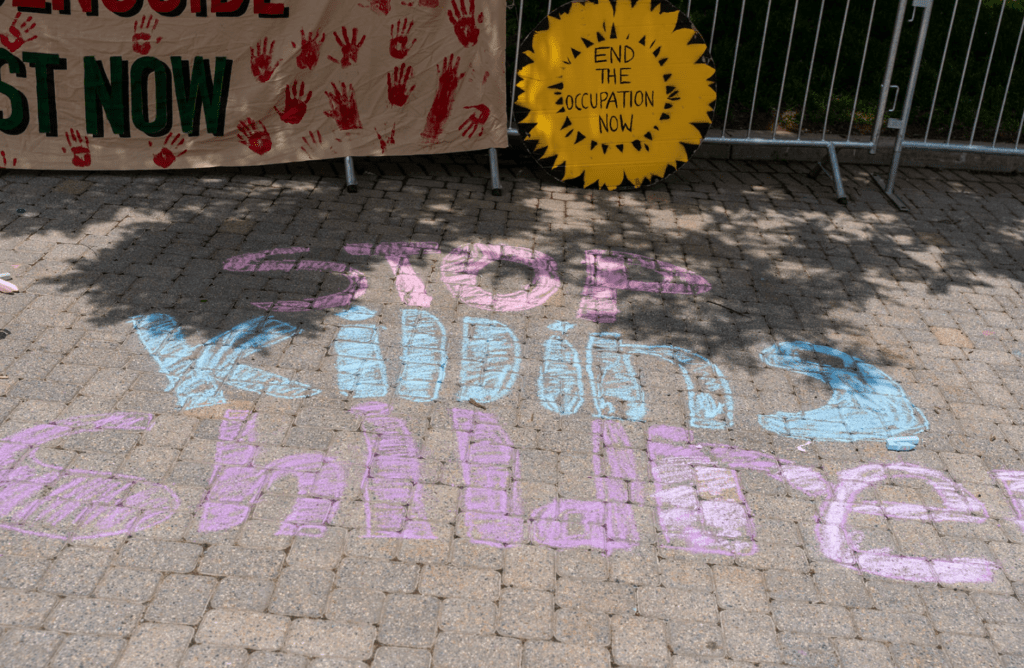
Student protesters expressed their anger and frustration at the injustices and human rights abuses Palestinians face at the hands of Israel.
“These innocent people across the sea, they’re facing all of this injustice and genocide on their people—for no reason,” Kataria said, “except for greedy land territorial settler colonists who came in the 1950s.”
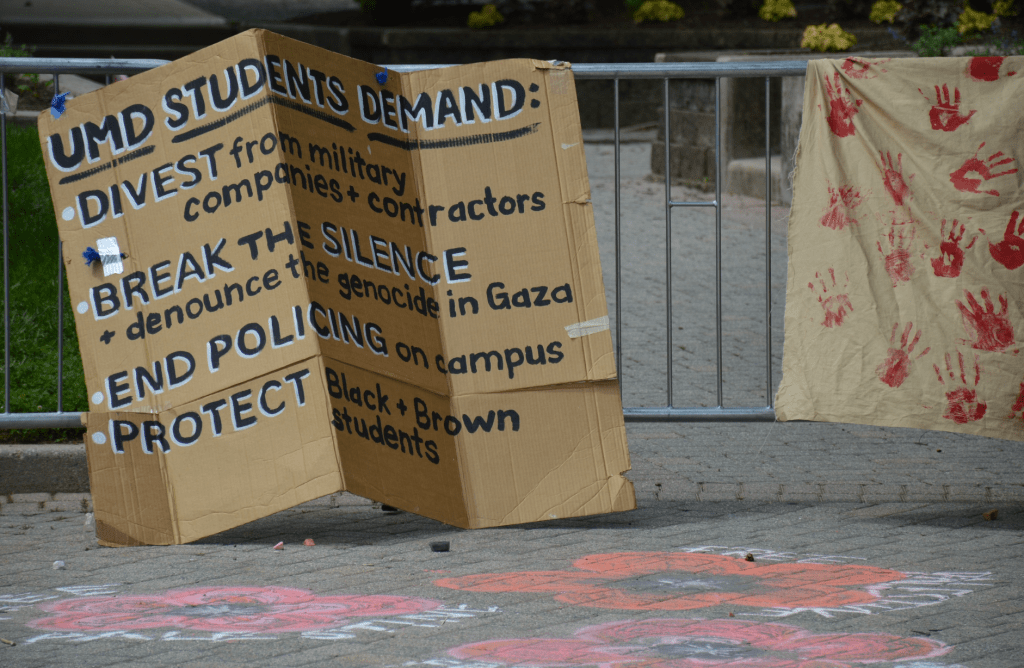
The roots of aggression towards Palestine date back to the early 20th century, but tensions escalated dramatically with the establishment of the state of Israel in 1948.
The formation of Israel was followed by the ethnic cleansing of over 700,000 Palestinians in what is known as the Nakba, or “catastrophe.”
In the decades since, Israel has maintained a military occupation of Palestine, imposed land, air, and sea blockades on Gaza, and repeatedly carried out brutal military assaults and forced displacement against Palestinians in both Gaza and the West Bank.
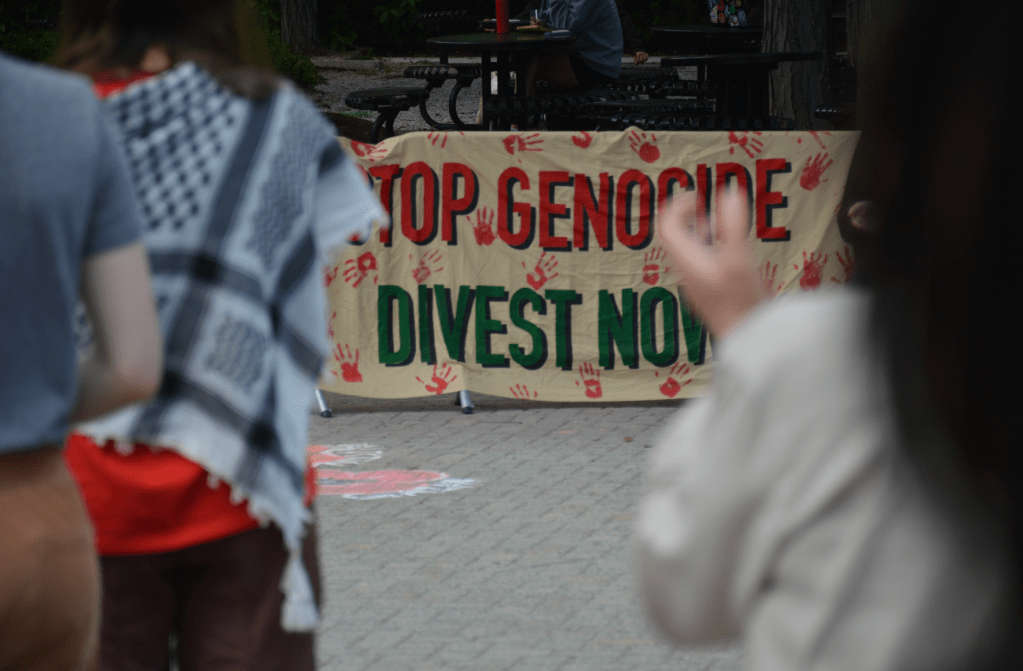
At least 61,700 Palestinians have been killed by Israel since Oct. 7, 2023. A significant majority of those killed are civilians, with around 30% being children.
“I just feel very angry and I want to protect the people of Gaza,” Kataria said.
Kataria was not alone in that sentiment. Many students expressed grief, outrage, and an unwavering commitment to advocacy.
“We stand in firm solidarity with the students here on campus, the Palestinian students here on campus, and immigrant students here on campus,” Foos said.
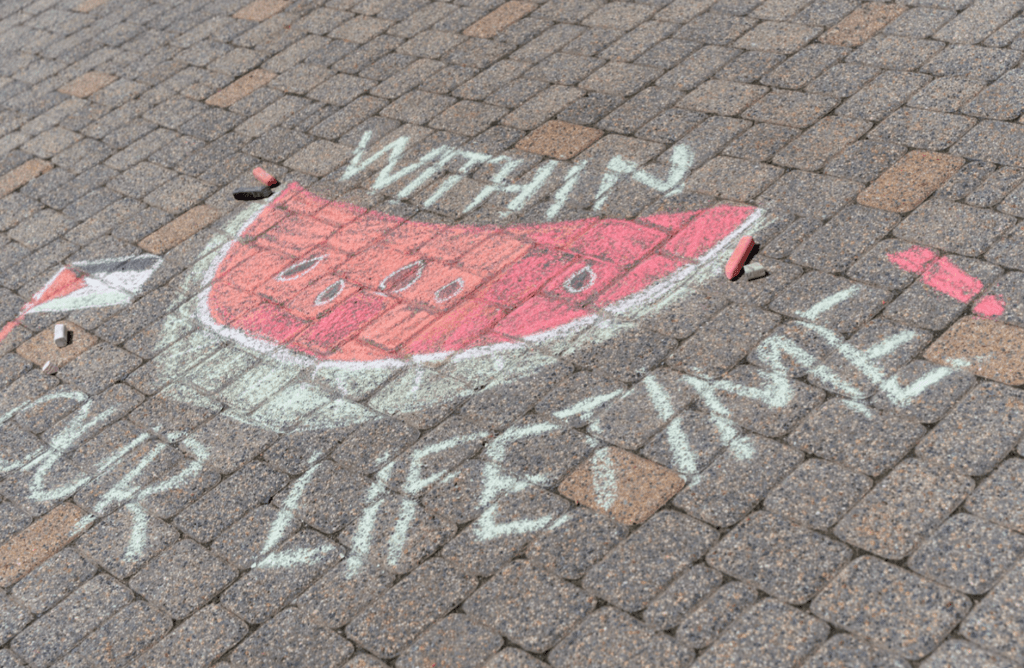
Image credits: Cover photo by Al-Hikmah Photo Staff.
 Al-Hikmah
Leave a comment