
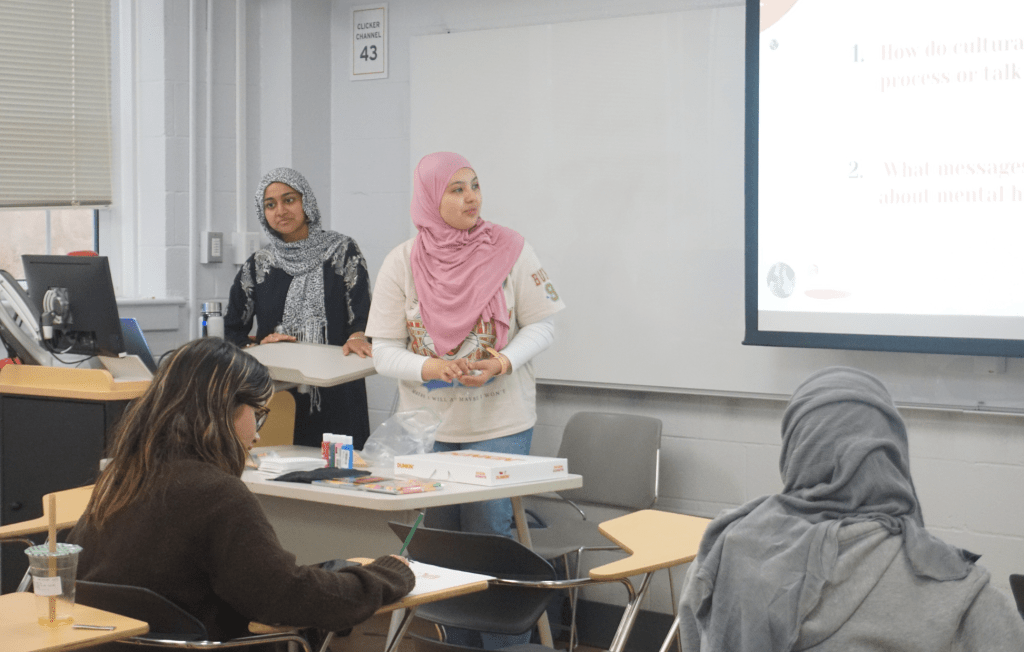
To create a space for Muslim students and others to discuss mental health through cultural and religious lenses, Maha Idsassi and Yusra Umer co-founded the club Noor On My Mind (NOMM).
“As a Muslim student, I am passionate about my faith, but I feel like when we talk about Islam and mental health together we don’t give it all the aspects it deserves,” Umer, a junior neuroscience major said.
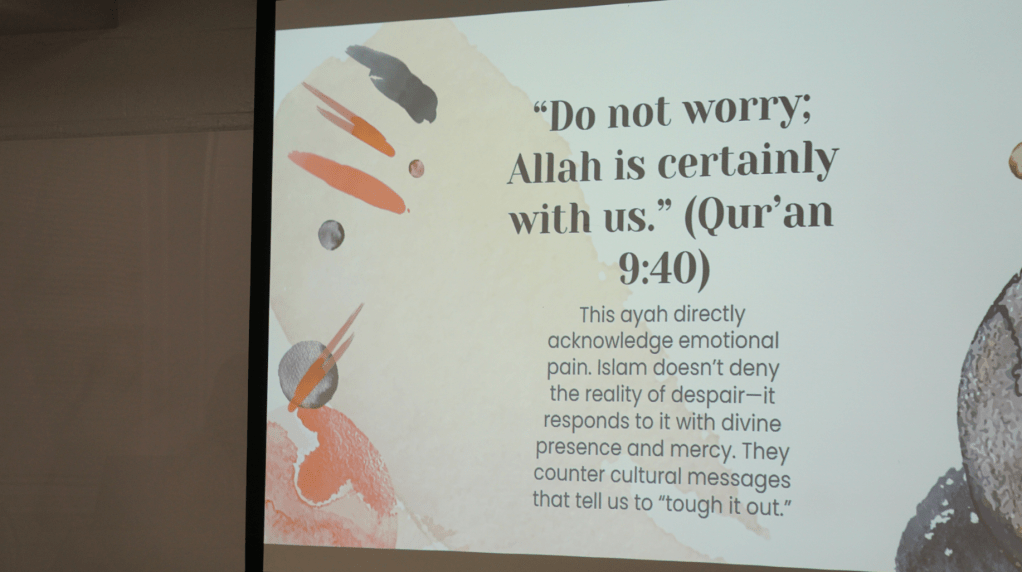
According to Umer, the main goal of NOMM is to have more discussions around mental health through incorporating Islamic teachings. The club aims to make a space for Muslims to be able to openly discuss mental health.
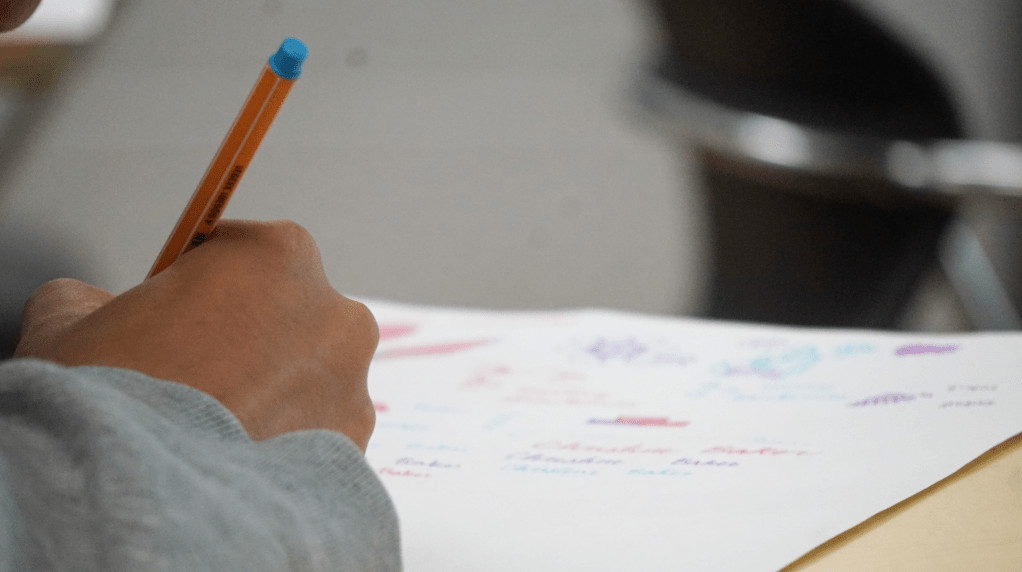
Some of the events held by NOMM include an art and journaling session to address generational mental health stigma, a study session, and a spring picnic in collaboration with Muslim Women in Medicine (MWM). Each event begins with a brief reflection or presentation led by Umer and Idsassi.
NOMM was established this spring semester, and as they try to build their E-board, they face challenges engaging the student community.
“It’s already hard enough to talk about mental health so openly, but especially [topics like] men’s mental health can [be] extremely under-discussed,” Umer said.
Bilal Siddiqui, a junior psychology major who attended NOMM’s Breaking Generational Silence event, echoed this sentiment.
“I feel like this space needs to exist, and I know that brothers have a hesitation towards conversations like this,” Siddiqui said.
Siddiqui heard about NOMM through a poster in the Musallah. He feels like mental health is an underrepresented topic in the Muslim community, and liked the idea of having a specific space for Muslims to talk about mental health, prompting him to join.
“They [brothers in the Musallah] were making fun of it [NOMM], and they’re going to keep making fun of it, unless someone decides to actually join and say it’s not so bad, it’s actually useful, or it’s actually important,” Siddiqui said.
In a statement to Al-Hikmah, the University Counseling Center wrote, “We want to affirm that seeking help from mental health professionals is also a valid and important step, especially when experiencing emotional or psychological distress. Cultural beliefs and professional support can coexist, and both can play meaningful roles in the path toward healing and wellness.”
The UMD Counseling Center affirmed its support for Muslim students, while acknowledging religious stigmas and encouraged anyone seeking help to do so.
“The UMD Counseling Center is here to support our Muslim students in a respectful and understanding way. We are committed to helping you connect with appropriate resources that align with your values and needs,” the statement read. “We encourage our Muslim UMD community to contact the Counseling Center at 301-314-7651. We are here for you and will connect students to appropriate care as quickly as possible.”
Image credits: Cover photo by Amna Tariq for Al-Hikmah.
CORRECTION: Due to an editing error, some wording was changed to better reflect the club structure.
 Al-Hikmah
Leave a comment