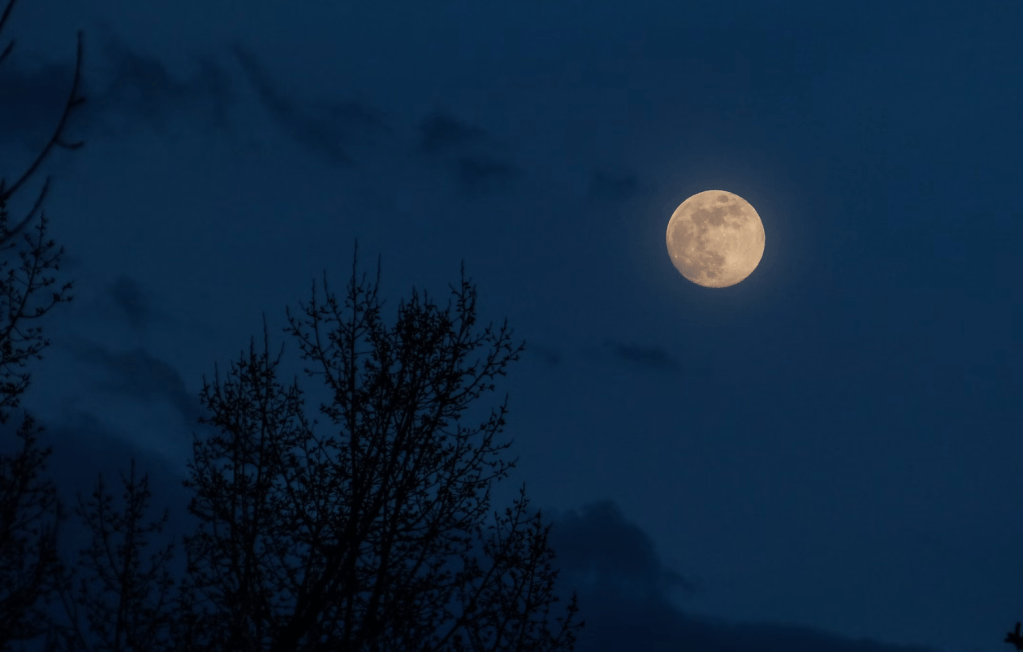
Laylatul Qadr, or the Night of Decree, is a pivotal night in Islam that marks the first revelation of the Quran to Prophet Muhammad (SAW).
Although the exact date of this night is unknown, it is believed to be one of the final ten nights of the Islamic month of Ramadan (Sahih Bukhari 2020).
Described in the Quran as “better than a thousand months”, Laylatul Qadr holds unparalleled value and blessings (Quran 97:3). The Prophet Muhammad further emphasized its importance, saying, “Whoever stood for the prayers in the night of Qadr out of sincere Faith and hoping for a reward from Allah, then all his previous sins will be forgiven” (Sahih Bukhari 2014).
These are just a few reasons why Muslims devote these final ten nights of Ramadan towards extra worship.
To understand the significance of Laylatul Qadr, it’s important to look at the moments leading up to this momentous night.
Before the Revelation
The period before the revelation of the Quran is known as the time of Jahilliyyah–the “Age of Ignorance”—when polytheism prevailed in Arabia. While many people believed in Allah (SWT) (Quran 29:61), they had deviated from monotheism by worshipping idols and keeping them as intermediaries (Quran 29:17).
The Kaaba, built by Prophet Ibrahim in Mecca as a house of monotheistic worship, was later filled with idols. Over time, the pilgrimage to the Kaaba became corrupted by practices like clapping and whistling (Quran 8:34-36). One of the darkest social practices of that time was the burying of female infants, a practice later abolished by Islam (Quran 16:58-59).
At the age of 40, Prophet Muhammad was living in Mecca with his wife Khadijah bint Khuwaylid (RA) and their children. Unlike many of his relatives, the Prophet did not worship idols before the revelation.
Disturbed by the injustices and corruption around him, he often sought solitude in the Cave of Hira, which was on the outskirts of Mecca, to reflect on these matters.
In the cave, he would reflect on what was happening around him and worship Allah alone (Sahih Bukhari 3).
The Revelation of the Quran
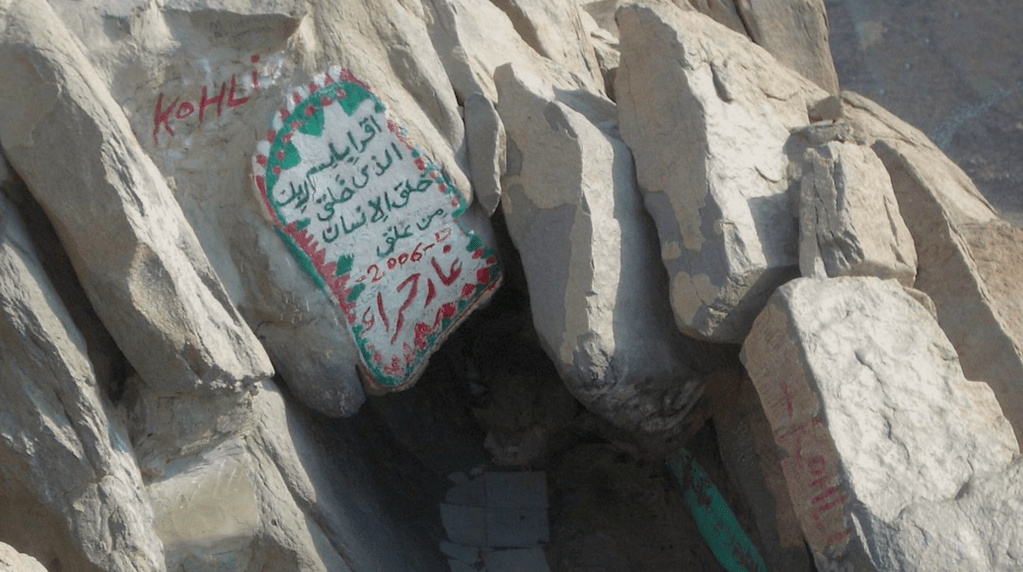
One day, while the Prophet was sitting in the Cave of Hira, an angel came to him and asked him to read. The Prophet replied, “I do not know how to read.”
For a moment, the angel pressed him tightly and then released him. The angel asked him to read again, and the Prophet repeated his answer. The angel did the same thing, and the Prophet gave him the same answer.
When the angel grabbed and released him for the third time, the angel revealed several verses of the Quran, the very first verse being, “Read in the name of your Lord, who has created [all that exists], created man from a clot. Read! And your Lord is the Most Generous.” (Quran 96:1)
The Prophet, overwhelmed by fear and awe, ran from the cave back to his home. Upon reaching his wife, Khadijah, he asked her to cover him.
When his fear subsided, he told Khadijah what had happened and said, “I fear that something may happen to me.”
Khadijah reassured him by reminding him of his noble character, telling him, “Allah will never disgrace you” (Sahih Bukhari 3).
The Aftermath: Seeking Understanding and Support
Khadjiah, concerned for the Prophet, took him to her cousin Waraqa bin Naufal, a learned Christian scholar who studied the scriptures and was familiar with the stories of previous prophets. Waraqa, though elderly and with weaker eyesight, listened carefully to the Prophet’s account of the event.
Waraqa told him that the angel was Angel Jibreel, the same angel that had brought revelation to Prophet Musa (AS). He also said, “I wish I were young and could live up to the time when your people [will turn against you].”
The Prophet asked, “Will they drive me out?”
Waraqa affirmed this and replied, “[The other prophets were] treated with hostility; and if I [would] remain alive till the day when [they will turn against you,] then I would support you strongly.” However, Waraqa died a few days later, and the revelations had paused for a while (Sahih Bukhari 3).
When the revelations paused, the Prophet felt uncertain. But soon after, while walking one day, he heard a voice from the sky.
It was the same Angel Jibreel, who now appeared in full form. Filled with fear again, the Prophet returned to his home and asked his family to cover him with blankets.
It was then that Allah revealed the first five verses of Surah Al-Muddathir, “O you covered up [in your clothes]! Arise and warn [all]. Revere your Lord [alone]. Purify your garments. [Continue to] shun idols.” After this, the revelations came strongly and consistently. (Quran 74:1-5, Sahih Bukhari 4)
Lessons
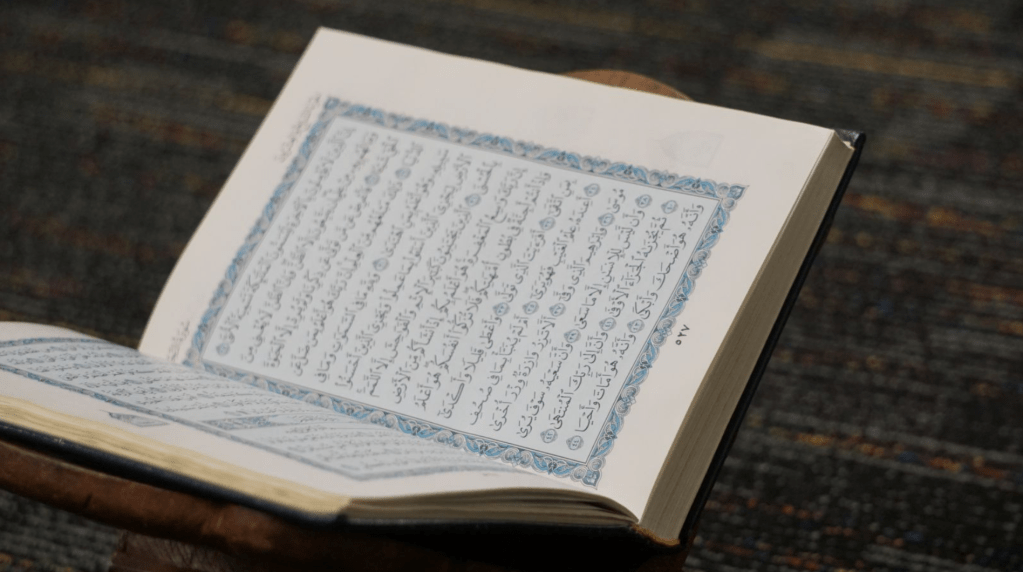
The story of the first revelation to Prophet Muhammad and the significance of Laylatul Qadr offer profound lessons.
The Prophet was initially fearful during the first revelation in the Cave of Hira. Khadijah had reassured him that he had done nothing wrong and that Allah would never disgrace him. This teaches us the importance of having supportive companions in times of fear.
Senior Sariyya Alima emphasized this by saying, “I think having good companions around you is highly important. For example, [Khadijah] consoled [The Prophet] and reassured him that he hadn’t done anything wrong.”
Similarly, Ghamatullai Jalo, a sophomore majoring in international business and finance, said the story “reassure[s] us that even though we might have all these fears and all these things we think about in our head, we shouldn’t be afraid to talk about it.”
The Prophet’s struggles throughout this time of uncertainty and his feelings after he encountered Waraqa show us the importance of trusting that Allah will do the best for us. Reflecting on this historical context allows us to deepen our connection to Allah.
“I feel like understanding the history of it really grounds you…[Islam] is all about understanding,” added Alima.
“[Know] that you are a very finite being, and there is only one Lord and Creator who is infinite,” she said. “[Let] this knowledge really move you to your core, and [ask] Allah to help you through it all.”
Image credits: Cover photo by Kym MacKinnon, used under Unsplash / Cropped from original. [Link to original image.] License details: Unsplash license
 Al-Hikmah

Leave a comment