
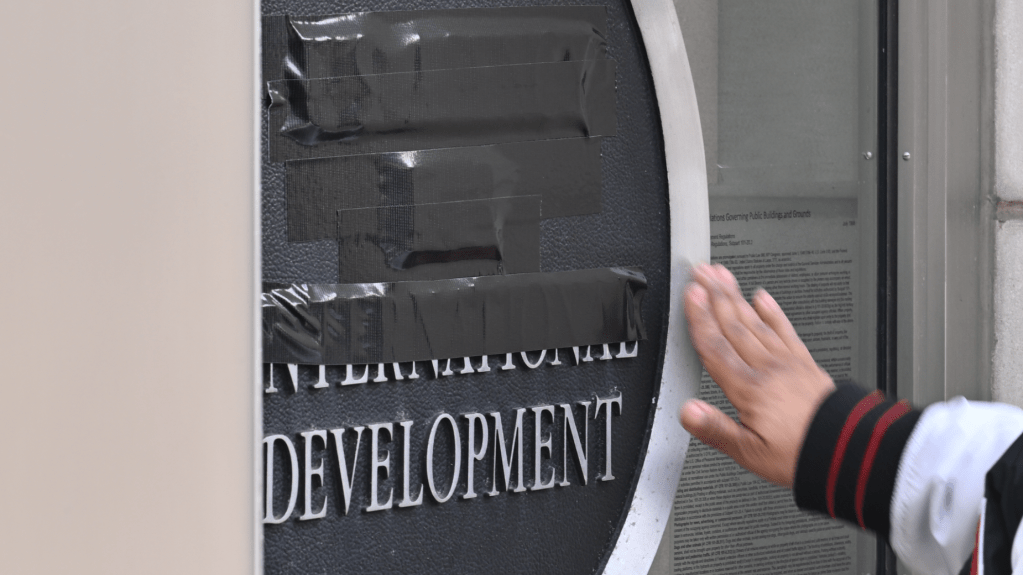
On a frigid Tuesday afternoon, maintenance crews removed the silver-coated letters from the organization’s headquarters in Washington, D.C. This wasn’t just signage being taken down from a federal building — it was the erasure of a symbol imprinted on thousands of tents, bags of food, and humanitarian resources that millions across the globe relied on to survive.
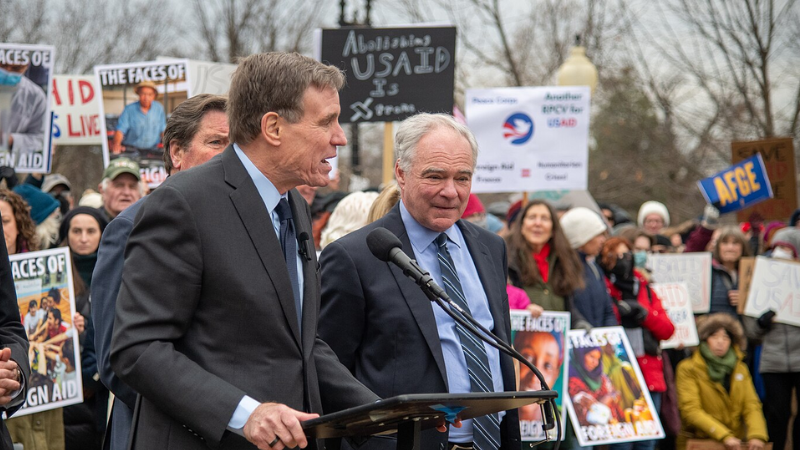
For decades, the United States Agency for International Development (USAID) has funded critical programs, ranging from pandemic prevention and combating food insecurity to providing humanitarian aid in war-torn areas. USAID notably funded key scholarships for Afghanistan’s girls, serving as one of the few remaining barriers against a full blockade of female education by the Taliban.
Since the beginning of the current Trump administration, and the introduction of Elon Musk’s Department of Government of Efficiency (DOGE), it was clear that the agency’s days were numbered.
Musk directed DOGE to cut down the agency after taking to social media and saying that it was “time for [USAID] to die.” Within days, employees were placed on probation, and by early February 2025, USAID was gone. The administration’s strategy of shock-and-awe has left many experts reeling, some contemplating what may be a constitutional crisis.
But while the fallout at home has only just begun, in Afghanistan, the crisis continues to worsen.
Trump’s significant cuts to USAID funding in early 2025 resulted in the closure of secret schools that had been providing education to girls under Taliban restrictions. While a federal judge recently issued an injunction to temporarily halt the dismantling of USAID, the future of girls’ education in Afghanistan remains uncertain.
As Trump’s “America First” agenda pushes forward, questions arise about whether a little girl’s right to education has been placed on the back-burner.
Cuts to USAID, once a lifeline for girl’s education in Afghanistan, have left women’s rights in the country hanging in the balance.
The Importance of USAID
Women’s rights in Afghanistan have been in turmoil since the Taliban’s resurgence following the U.S. withdrawal in August 2021.
According to UNICEF, some Taliban representatives had made empty statements claiming to reopen schools after the U.S. withdrawal. However, the group quickly resumed its decades-old policy of suppressing girls’ education.
By late 2024, the few remaining girls’ schools were hanging by a thread, with education discontinued past early middle school. USAID was one of few remaining humanitarian organizations maintaining a semblance of support for the Afghan people, as nearly 3 million are on the brink of starvation in the wake of what the global community widely calls an illegitimate and unreliable Taliban government.
Even with their limited resources and persistent security challenges, the regime continues to crack down on educational opportunities for Afghanistan’s girls.
It was USAID that provided some of the last remaining educational opportunities for girl’s education, such as secret girls’ schools and scholarships for women.
After the Taliban’s June 2023 decree banning NGOs from funding education programs—programs that once supported nearly 300,000 Afghani girls—USAID became one of the few programs that were able to continue funding these underground schools—until Trump’s current administration began.
An Afghan Woman Speaks Out: Setara Khan’s Story
Setara Khan, an Afghan-American woman who fled Afghanistan at the age of 19 after facing increasing oppression–and the parent of a UMD student–responded to the news of USAID’s effective shutdown with a mix of disappointment, frustration, and cautious optimism.
“All of a sudden, the revolution came, and the invasion from Russia happened, and [our] whole life, the whole country [was turned] upside down. And we’ve still not recovered from it,” Khan said. “And until today, we don’t know who’s running the country.”
Many nations, including the U.S., still refuse to recognize the Taliban as a legitimate government as a result of the absence of a proper government authority and its negligence of women’s rights. The result has left Afghanistan in a state of perpetual political turmoil and social disarray.
Reacting to the news of the USAID shutdown, Khan emphasized the crucial role of women in any society: “Women play a fundamental role in progress. Denying them education doesn’t just push the country backward—it erases its future.”
She underscored the long-term consequences, warning that without education, Afghanistan would soon face a catastrophic shortage of female doctors, teachers, nurses, and scientists, among other professions.
“Uneducated mothers will have no way to contribute to society or raise the next generation,” she added, emphasizing that without education for girls, Afghanistan will face a difficult future.
Khan also mentioned the impact of USAID’s shutting down on the U.S., saying the decision would have “serious consequences for both the Afghan people and the U.S.”
Despite the situation, Khan still has hope.
“I can only visualize it, but I believe in a bright future for Afghanistan,” she said.
When asked about what she would say if given a platform to speak directly to Trump and Musk, Khan didn’t hesitate. She condemned their dismissal of international concerns and specifically called out Trump’s public mockery of foreign accents.
“I hope my voice will be understood rather than ridiculed,” Khan said.
Looking to the Future
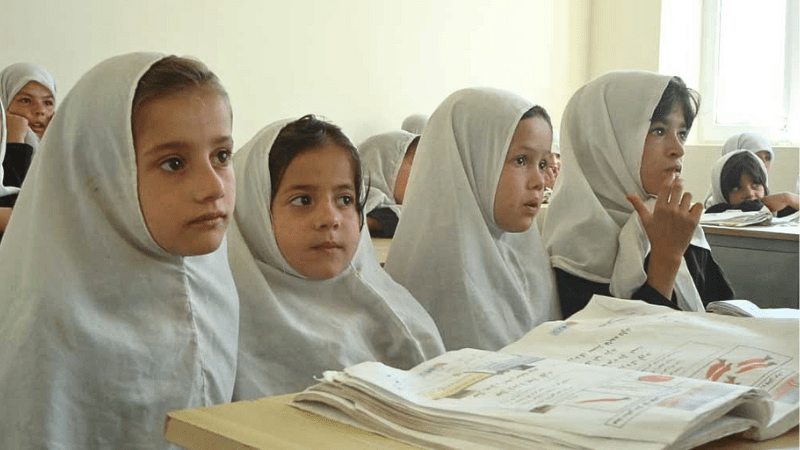
Without USAID’s support, the future for Afghan women remains uncertain.
As the world reacts to a flurry of new updates from the Trump administration, the fundamental rights of Afghanistan’s girl’s continues to fade further into the background.
However, regardless of the nonstop coverage of the current administration, Khan feels it shouldn’t become a reason to ignore the crisis in Afghanistan.
“The more it’s mentioned, the more the world sees it,” she said.
The fight for a girl’s right to receive an education remains a pressing global concern. And Khan’s message to President Trump and Musk? Do better.
Image credits: Cover photo by Sgt. Kimberly Lamb in 2012, used under Public Domain. [Link to original image.]
 Al-Hikmah
_workers_on_5_February_2025_-_3.jpg)


Leave a comment