
The creation of Prophet Adam (AS) is a pivotal moment in Islam, marking the beginning of humanity. His creation reflects the profound wisdom and purpose of Allah’s (SWT) will, setting the stage for a story of trials, teachings, and struggles that define human existence.
Creation of Prophet Adam (AS)
Before creating Prophet Adam, Allah shaped Adam with clay gathered from various parts of the earth, symbolizing Adam’s descendants’ diverse complexions and physical characteristics (Tirmidhi: 2955).
Iblis, a jinn–an unseen being created from smokeless fire (Quran 55:15) –was allowed to be in the company of the angels (Quran 18:50). According to Tafsir Ibn Kathir, a book of Quranic interpretations, Iblis regarded Adam’s lifeless form with disdain and arrogance.
Eventually, Allah breathed a created soul into Adam, bringing him to life (Quran 38:72).
Iblees’s Disobedience
After Adam came to life, Allah taught him the names of everything, granting knowledge beyond that of the angels, as described in Surah Baqarah–“Allah said, ‘O Adam! Inform them (the angels) of their names.’ Then when Adam did, Allah said, ‘Did I not tell you that I know the secrets of the heavens and the earth, and I know what you reveal and what you conceal?’” (Quran 2:33)
This demonstrates how Allah blessed Adam with intellect, marking humanity’s unique capacity for learning and understanding.
Soon after, Allah commanded the angels and Iblees to prostrate to Adam. Allah says, “And (remember) when We said to the angels, ‘Prostrate before Adam,’ so they all did—but not Iblis, who refused and acted arrogantly, becoming unfaithful.” (Quran 2:34)
Iblis, who was created from fire, claimed superiority over Adam, who was created from clay (Quran 7:12) . He believed this made him more deserving of respect than Adam. His disobedience, envy, and ignorance led to his expulsion from Paradise.
The Forbidden Tree and Adam’s Arrival on Earth

A tree in a field. Photo by Johann Siemens on Unsplash.
According to mainstream Islamic views, Allah created the first woman, Hawwa, from Adam’s rib. This belief is derived from certain hadith sources (Sahih Bukhari 3331). Hawwa would also be Adam’s wife.
Allah allowed them to enjoy Paradise freely but warned them, “…come not near this tree [the Forbidden Tree] or you both will be of the wrongdoers.” (Quran 2:35).
Iblis, driven by envy, snuck into Paradise and deceived them to eat from the Forbidden Tree. As a result, Allah commanded them all to descend to Earth. This marked the beginning of the enmity between shaytaan (disobedient jinn) and humankind (Quran 2:36).
After reaching Earth, Adam soon repented. Allah also warned them that while they were on Earth, He would send messengers and books to guide the people, and whoever didn’t follow them would be punished (Quran 2:38 – 39).
Habeel and Qabeel
Some Islamic scholars, drawing from older Judeo-Christian traditions, have suggested that Adam and Hawwa had many children, born in sets of twins.
According to Tafsir Ibn Kathir, some scholars narrate that Allah directed Qabil to marry Habil’s twin sister and Habil to marry Qabil’s twin sister. However, Qabil found Habil’s sister less attractive and wanted to marry his own twin sister instead. Adam refused and commanded both brothers to offer sacrifices, stating that whoever’s sacrifice was accepted would marry Qabil’s twin sister.
The Quran does not explicitly mention this marriage narrative but instead emphasizes Qabil’s jealousy. It states that Habil offered a sincere sacrifice, while Qabil offered an insincere one. Habil’s offer was accepted, but despite this clear sign of Allah’s preference, Qabil did not comply.
When Qabil threatened to kill his brother, Habil replied: “If you raise your hand to kill me, I will not raise mine to kill you, because I fear Allah—the Lord of all worlds.” (Quran 5:28). Even though Habil warned him, Qabil killed him.
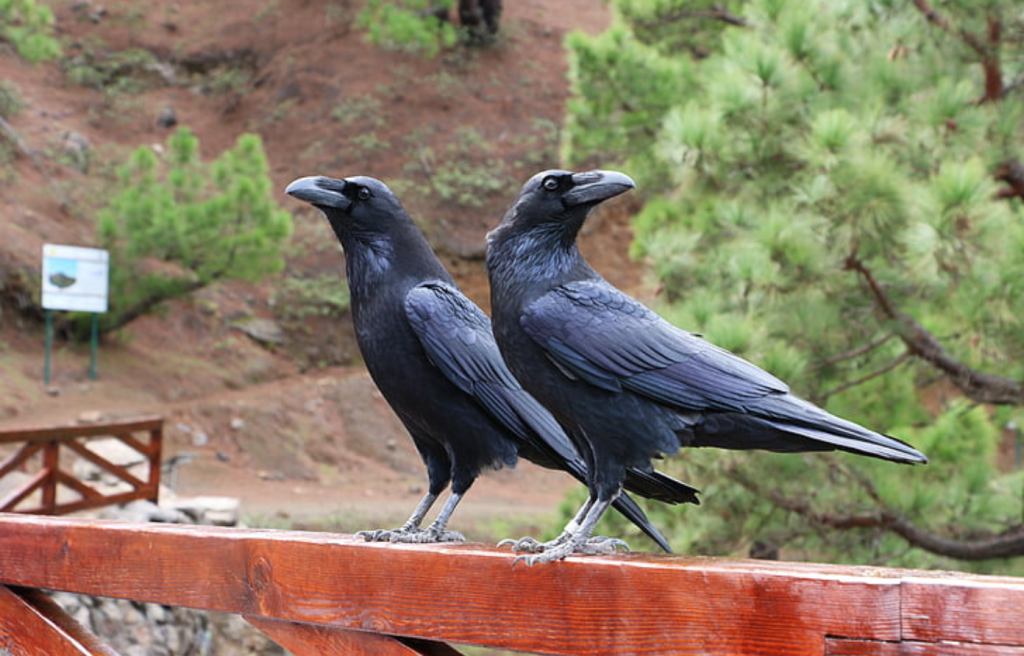
In Surah Ma’idah, verse 31, Allah describes that He sent two crows that fought each other until one was killed. The crow that was left dug a hole into the ground, placed the dead crow in it, and covered it back up with dirt. After witnessing this, Qabil said “Alas! Have I [even] failed to be like this crow and bury the corpse of my brother?” Qabil then buried his brother.
Lessons
The story of Habil and Qabil reflects a broader theme in Islam: the contrast between humility and arrogance, as seen in the story of Adam and Iblis.
Iblis, once the most devout of the jinn, was honored by Allah and brought to Paradise. However, his disobedience, driven by arrogance and envy, wiped out his good actions. In contrast, when Adam sincerely repented, Allah forgave him. This serves as a reminder that Allah is Ar-Rahman (the Most Gracious) and Ar-Rahim (the Most Merciful), and is always ready to forgive those who repent sincerely.
“The story shows Allah’s mercy on him [Prophet Adam] and in turn shows us how Allah can be merciful to us,” said Deelan Doski, a first year landscape architecture major. “This can be a source of comfort, as many people think they aren’t worthy of Allah’s mercy because they’ve sinned too much. Allah shows otherwise.”
The incident between Habil and Qabil offers several valuable lessons. It demonstrates how unchecked jealousy and envy can drive us to harm others and cause deep regret later. It emphasizes the importance of sincere worship. Qabil’s sacrifice was rejected due to insincerity, underscoring that worship should stem from genuine dedication.
Asma Muhie, a freshman and computer science major, reflected on the story. She said, “The story of Allah teaching Adam the names of all things shows how us humans have been blessed with intellect. With that blessing comes the responsibility of seeking knowledge and determining for ourselves the right from wrong.”
Image credits: Cover photo from PicPick.
 Al-Hikmah
Leave a comment